
Mi Amigo, Endcliffe Park, Sheffield
It’s easy to walk through Endcliffe Park without noticing the memorial. The trees feel established, the grass ordinary, the noise of the city distant but present. Nothing about the place suggests disaster. And yet, on a winter afternoon in 1944, this familiar Sheffield park became the site of a wartime crash that claimed the lives of ten American airmen — and the beginning of a story that has grown, shifted, and settled differently depending on who is telling it.
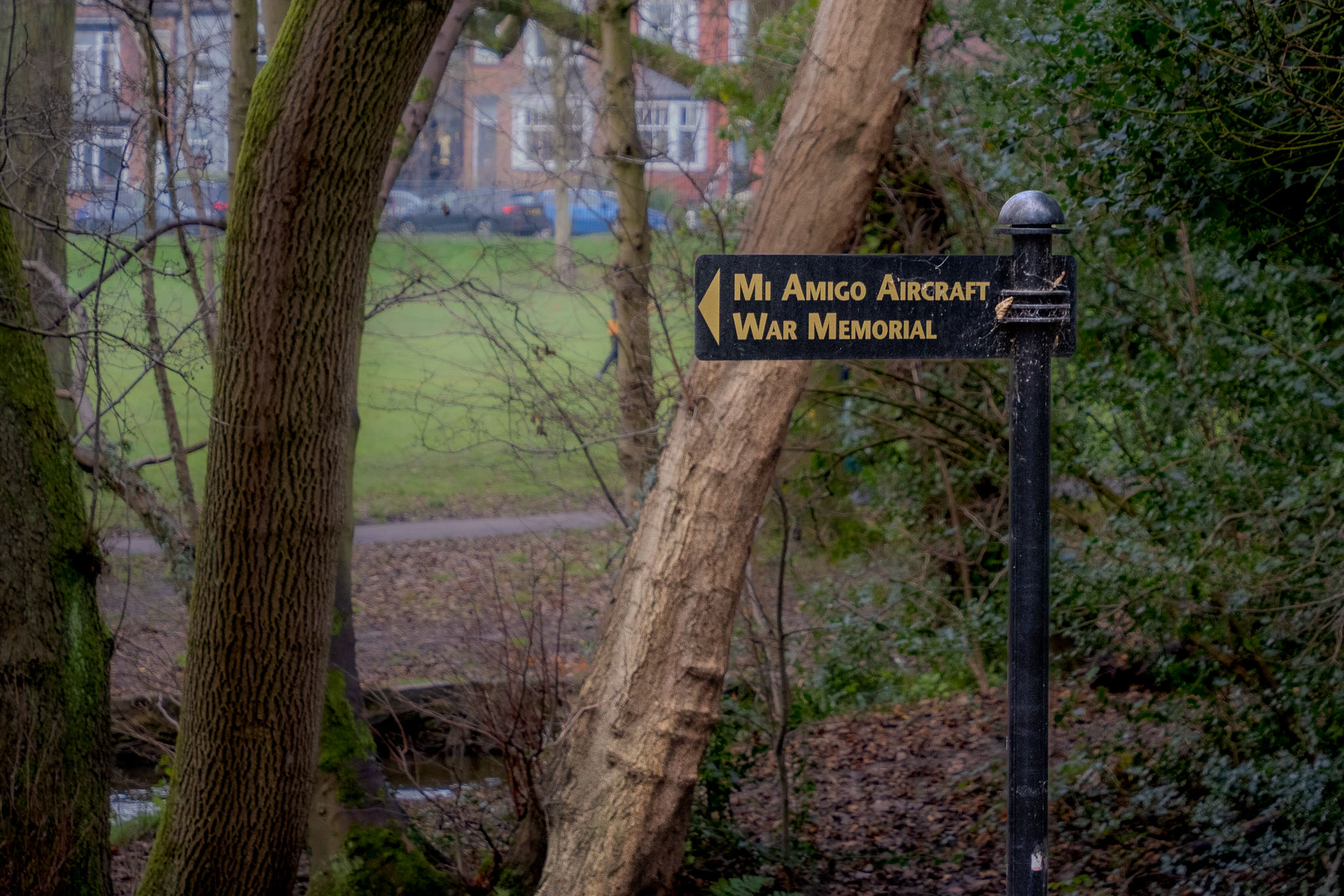
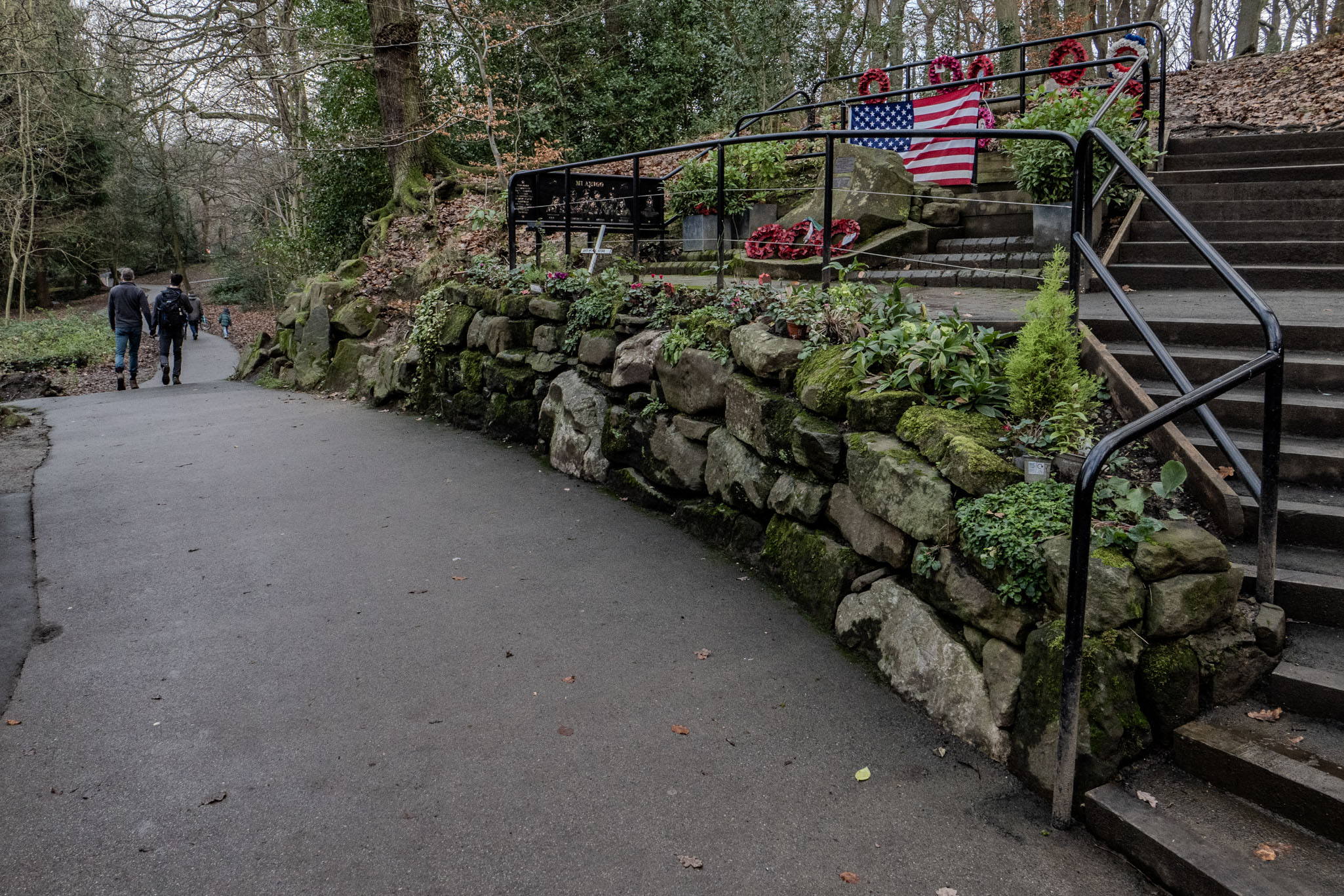
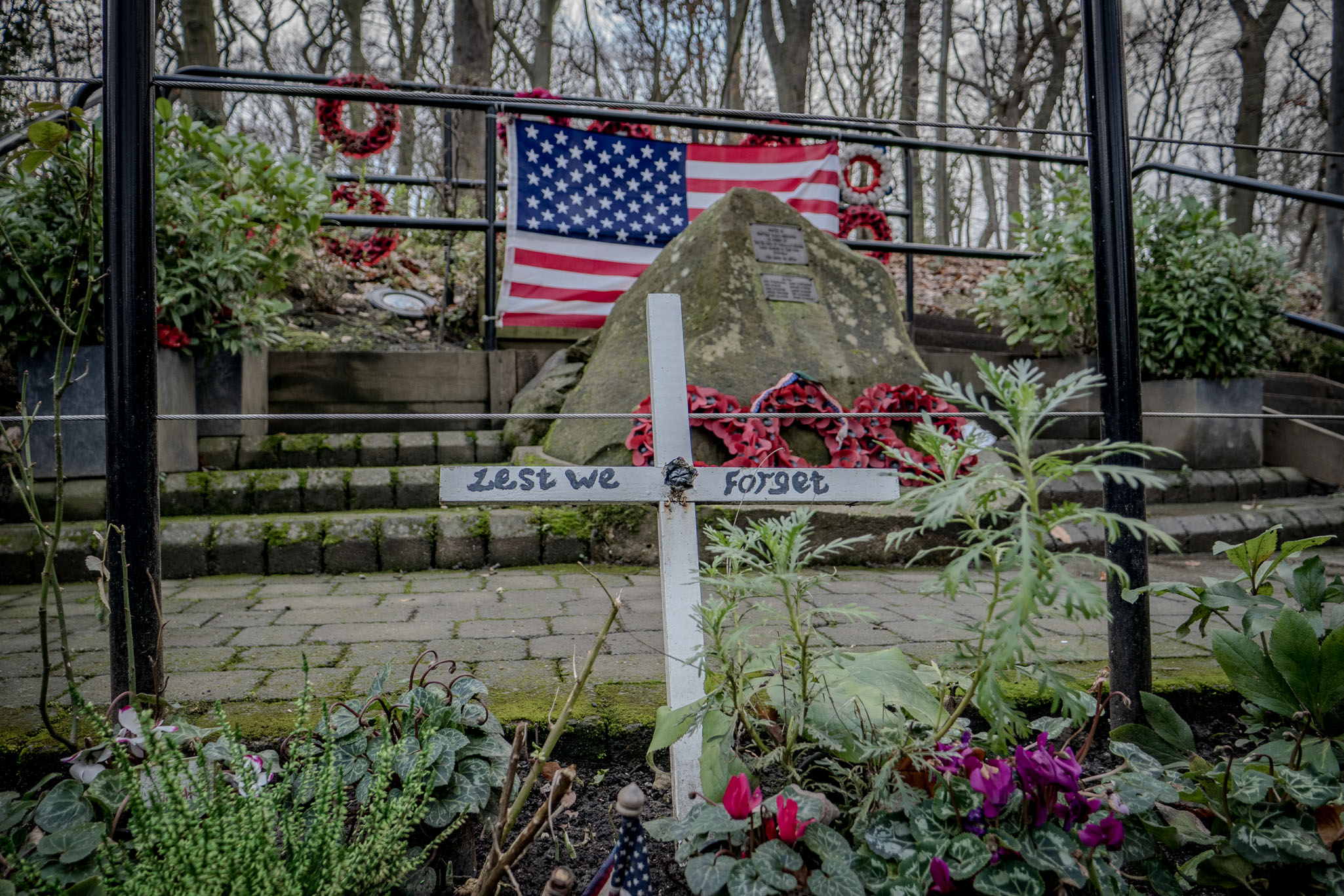
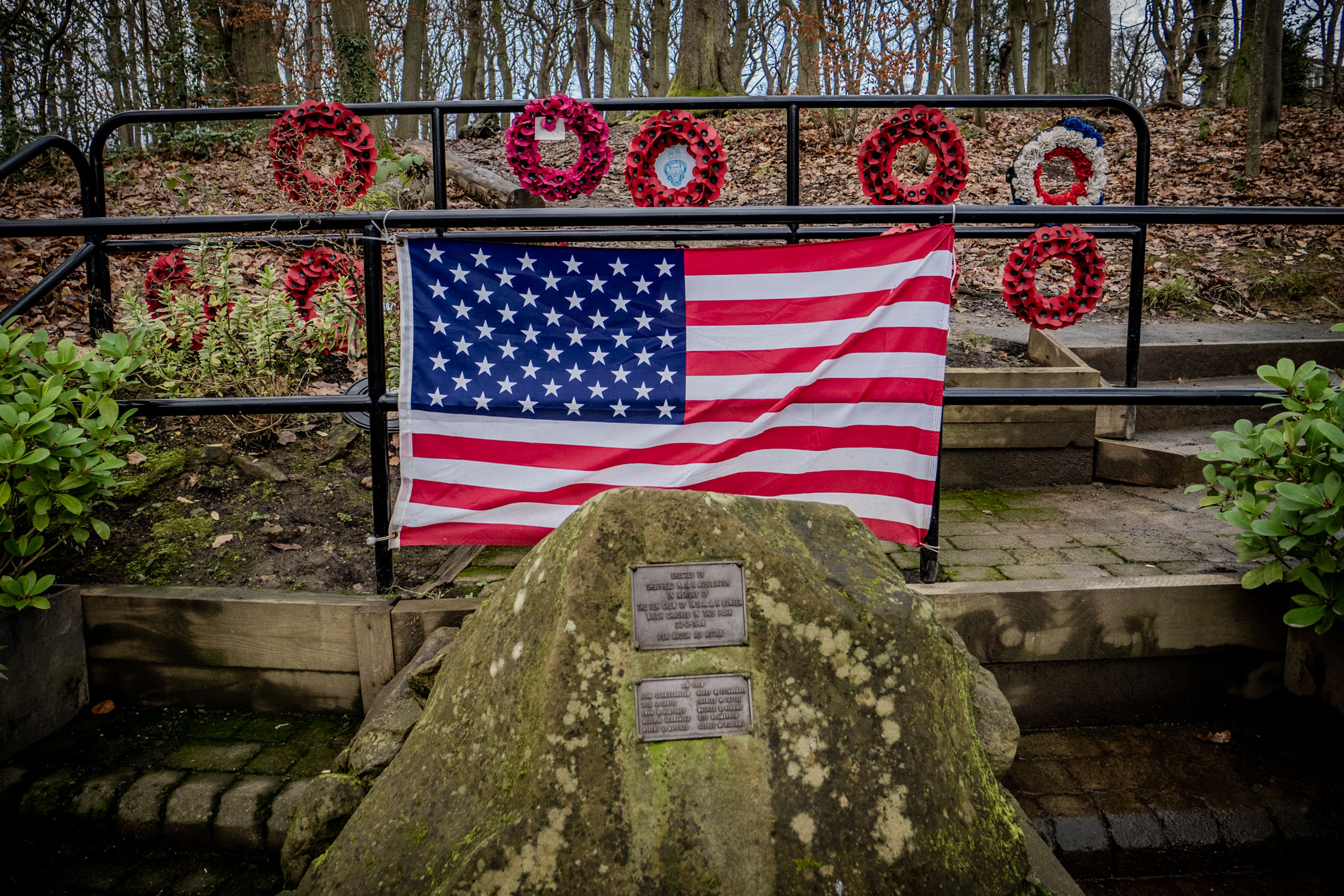
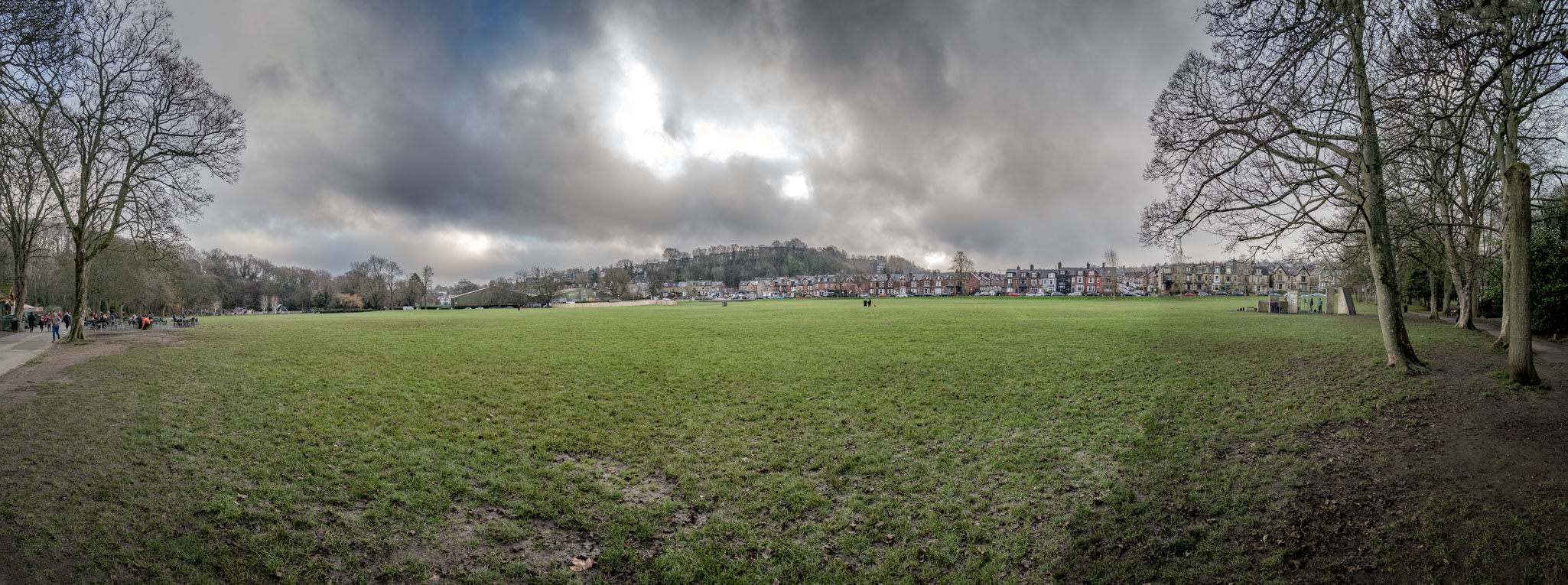
I came to Endcliffe Park with a camera after only recently learning about the story of Mi Amigo. Standing by the memorial for the first time, photographing it felt less like documenting a location and more like taking a moment to notice it — the setting, the quiet, and how easily a significant history can exist within an everyday space.
On 22 February 1944, a USAAF B-17 Flying Fortress bomber, nicknamed Mi Amigo, crashed on the wooded edge of Endcliffe Park in Sheffield, killing all ten crew members on board. What happened in the aircraft’s final moments has been retold many times since — part documented history, part personal memory.
The commonly told story
The version most people now know begins with children playing football in the park that afternoon. One of them was Tony Foulds, eight years old at the time.
According to Tony’s account, the damaged bomber emerged from low cloud and descended toward the open grass. The pilot waved from the cockpit. The children waved back, assuming it was a friendly gesture. Only later did Tony come to believe the waving was a warning — and that the pilot, seeing the children below, chose not to land.
In this telling, the aircraft was pulled up at the last moment, clearing the field but stalling shortly afterwards. It struck trees on the hillside and exploded on impact. All ten airmen were killed.
It is a powerful and emotive story, and one that has become closely associated with the memorial in the park. In 2019, it was widely promoted by the BBC, bringing renewed national attention to the crash and to Tony Foulds’ lifelong belief about what he witnessed.
What the records tell us
The factual outline of the crash itself is not disputed. Mi Amigo had taken part in a daylight bombing raid over Aalborg, Denmark, and was badly damaged by German fighter aircraft. Several engines were failing, and the aircraft’s radio was disabled.
Military records indicate the bomber was around 80 miles off course by the time it reached Sheffield. Eyewitnesses described it flying very low, beneath the cloud base, circling and struggling to maintain altitude. Some recalled the aircraft appearing to “stutter” in the air.
Contemporary reports from 1944 describe the bomber stalling and crashing into trees. There is no mention of an attempted belly landing in Endcliffe Park, nor of children being deliberately avoided. The Sheffield Telegraph reported simply that the aircraft “fell out of the sky”.
From an aviation perspective, this matters. A B-17 required a long, flat runway even under ideal conditions. Endcliffe Park, uneven and bordered by trees and rising ground, could not have offered a realistic emergency landing option. By that stage, the crew’s remaining control over the aircraft would have been extremely limited.
The crew of Mi Amigo
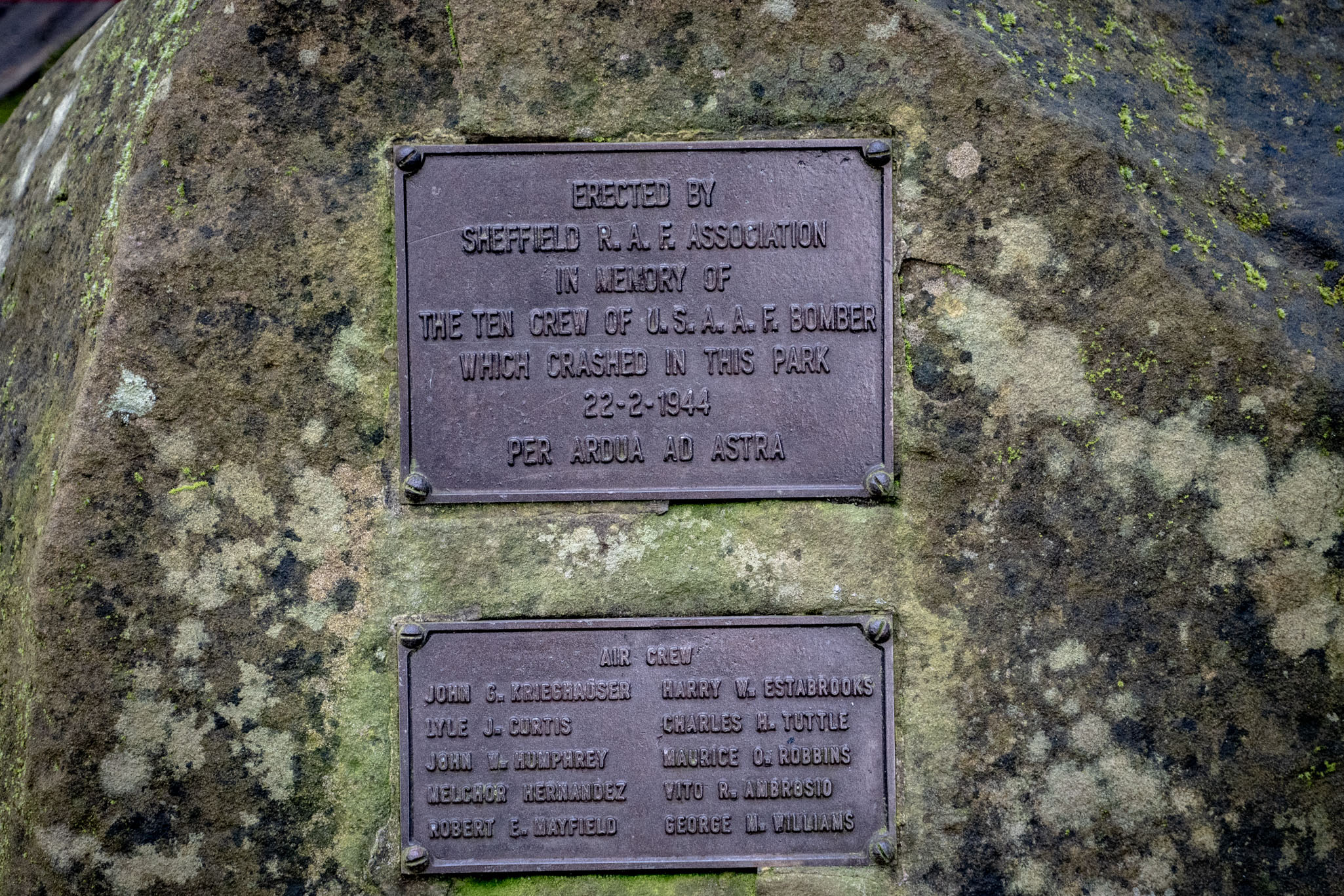
The ten men who lost their lives aboard Mi Amigo were:
1st Lt. John G. Kriegshauser – Pilot, Missouri
2nd Lt. Lyle J. Curtis – Co-Pilot, Idaho
2nd Lt. John W. Humphrey – Navigator, Illinois
2nd Lt. Melchor Hernandez – Bombardier, California
S/Sgt. Harry W. Estabrooks – Flight Engineer / Top Turret Gunner, Kansas
S/Sgt. Robert E. Mayfield – Radio Operator, Illinois
Sgt. Charles H. Tuttle – Ball Turret Gunner, Kentucky
Sgt. Vito R. Ambrosio – Right Waist Gunner, New York
Sgt. George M. Williams – Left Waist Gunner, Oklahoma
Sgt. Maurice D. Robbins – Tail Gunner, Texas
They were all young men, far from home, flying an aircraft that had already suffered critical damage.
Memory, folklore, and meaning
The contrast between these two versions of events does not necessarily mean one is dishonest. It reflects something more human.
Tony Foulds lived with the memory of that day for the rest of his life. From the perspective of an eight-year-old child, a low-flying aircraft, a waving pilot, and a violent crash are not easily separated into technical explanations. Over time, memory looks for meaning, and meaning often becomes sacrifice.
Most historians view the crash as the inevitable result of mechanical failure and loss of power. The aircraft came down in open ground rather than among houses largely because of geography. The park lay beneath its final path; the trees were simply where it stopped flying.
Standing there now
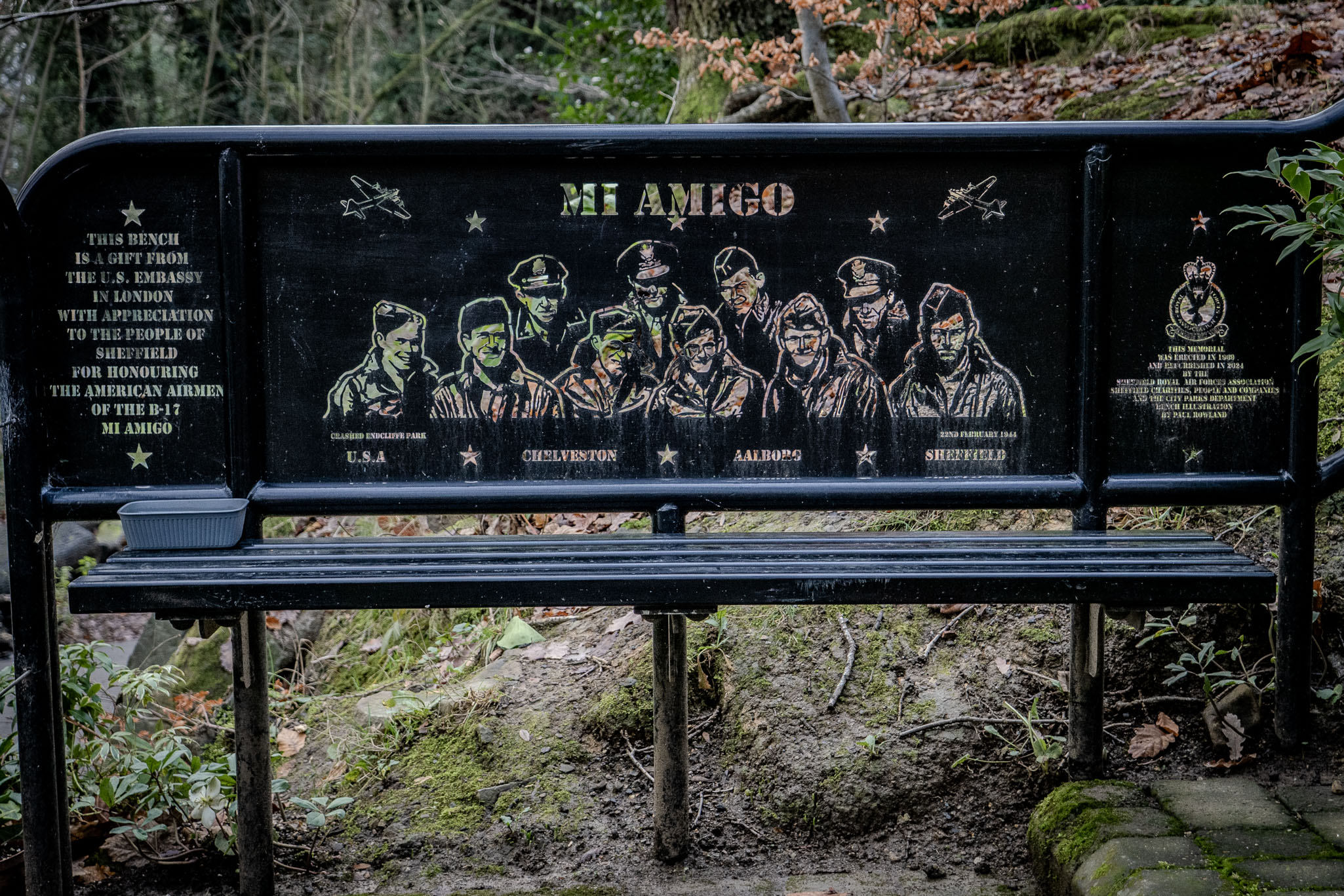
Today, the memorial in Endcliffe Park is quiet. Ten oak trees stand for the ten crewmen. People pass through the park without always knowing why they are there.
After the crash, the ten airmen were recovered and laid to rest far from the place where they lost their lives. Three of the crew are buried at Cambridge American Cemetery in Madingley, where thousands of U.S. service personnel who died in the Second World War are formally remembered. The remaining seven were repatriated to the United States, returned to their families, and buried in hometown cemeteries across the country. Endcliffe Park is not their final resting place, but it remains where their story ended — and where their loss is quietly marked.
Stories like this rarely resolve neatly. Records give us facts, but memory gives those facts weight. Standing in the park now, it’s possible to hold both at once — the technical reality of a failing bomber and the human need to believe that something meaningful came from its final moments. However the crash is understood, the memorial remains, quietly asking nothing more than to be noticed, and reminding us that history is not only about what happened, but how it is remembered.
Useful Information:
- 🌎 Location: Endcliffe Park, Sheffield, South Yorkshire, England
- ℹ️ Details: Site of the 22 February 1944 B-17 Flying Fortress (Mi Amigo) crash
- ✨ Signature Feature:
- Ten oak trees planted to represent each crew member, alongside a memorial plaque. The pilot, 1st Lt. John G. Kriegshauser, was honoured posthumously for his bravery.
- 🏢 Central Landmark: Mi Amigo Memorial at the edge of the park.
- 📍 Satnav: Endcliffe Car Park
- 🧭 Coordinates: 53.369057497055046, -1.507738400795854
- 🅿️ Parking: Limited on-street parking around Endcliffe Park
- 🌐 Official Link: Wikipedia: Mi Amigo crash
Related Posts:
- Mi Amigo: Remembering the 1944 Sheffield Crash at Endcliffe Park
- The Chained Oak of Alton: Dark Folklore, Real History & the Legend Behind the Chains
- The Forgotten Spirits of Edinburgh Castle
- The Story of Greyfriars Bobby, Edinburgh’s Most Loyal Dog
- The Legend of Molly Leigh — The Burslem Witch
Related Tags:
Dark History Dark Tourism Disaster Sites Folklore True Crime Unsolved Mysteries