
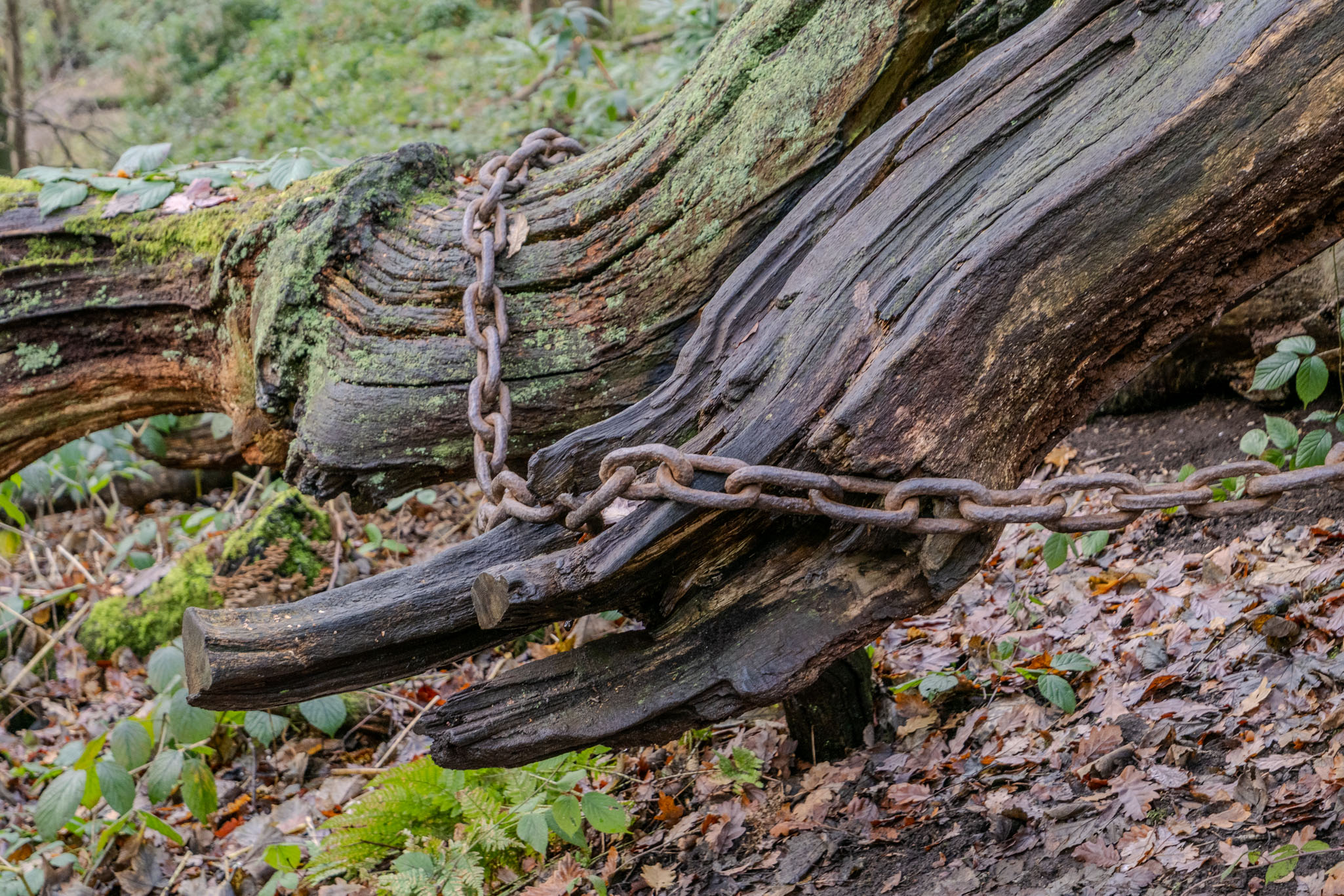
At the Foot of the Chained Oak
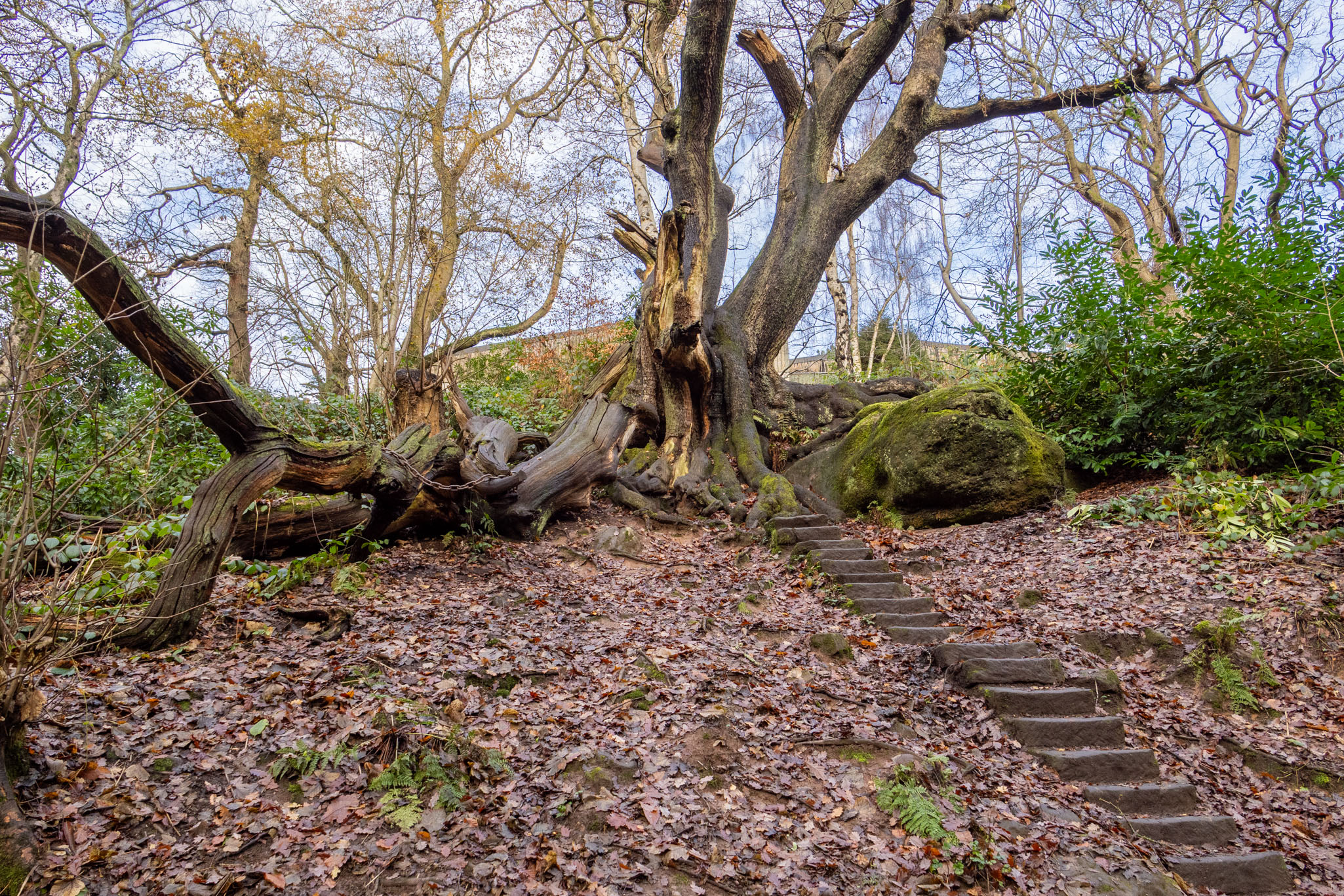
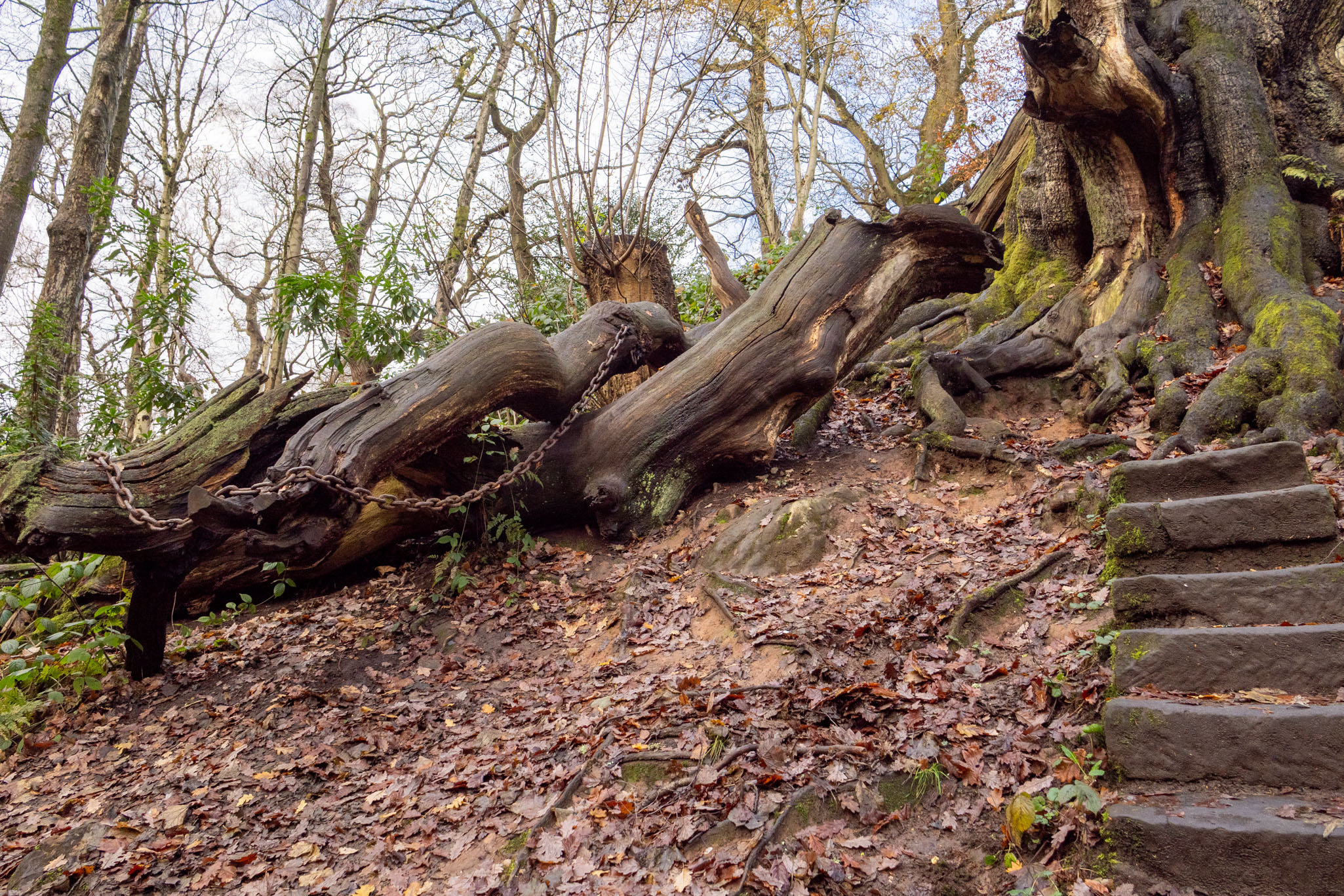
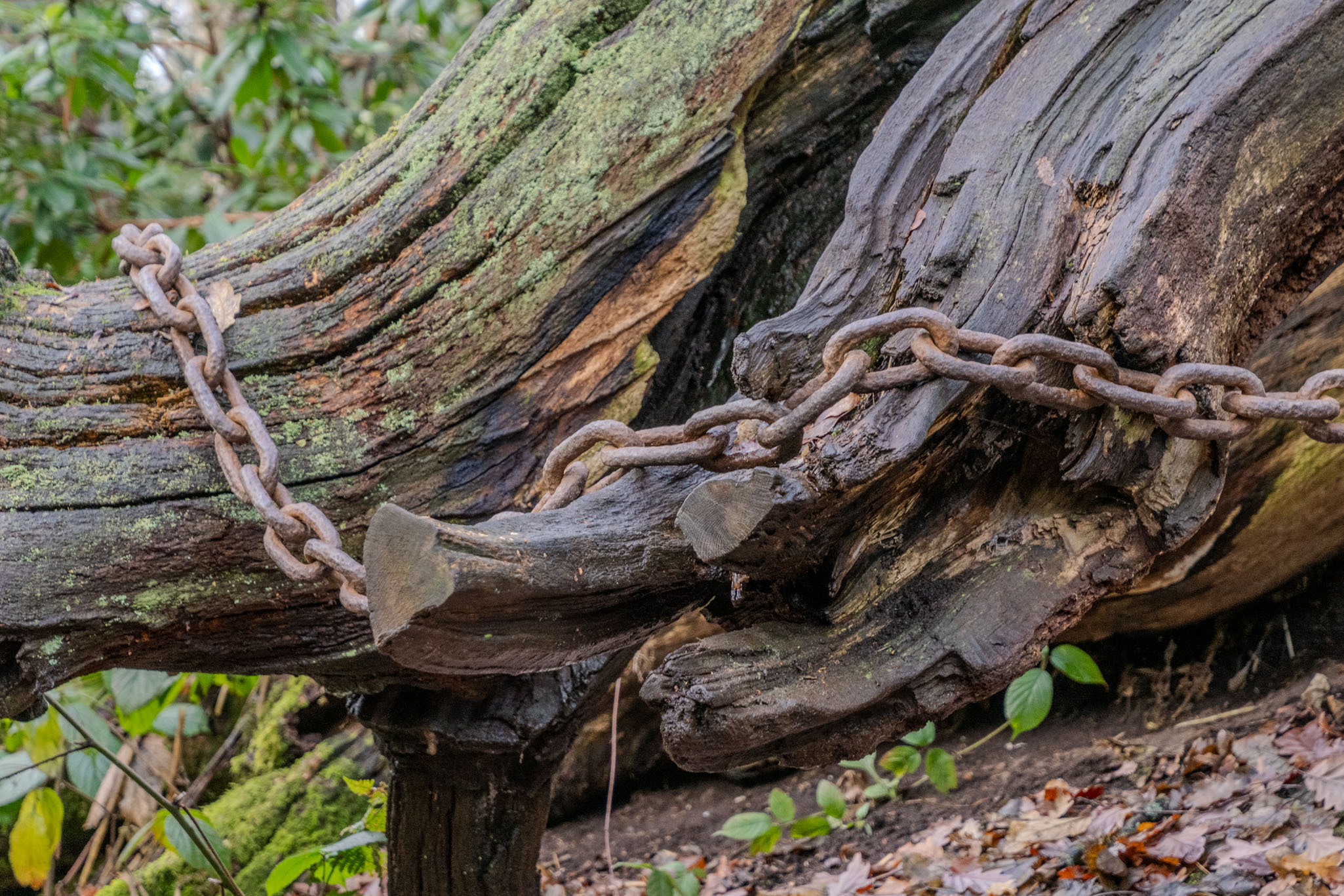
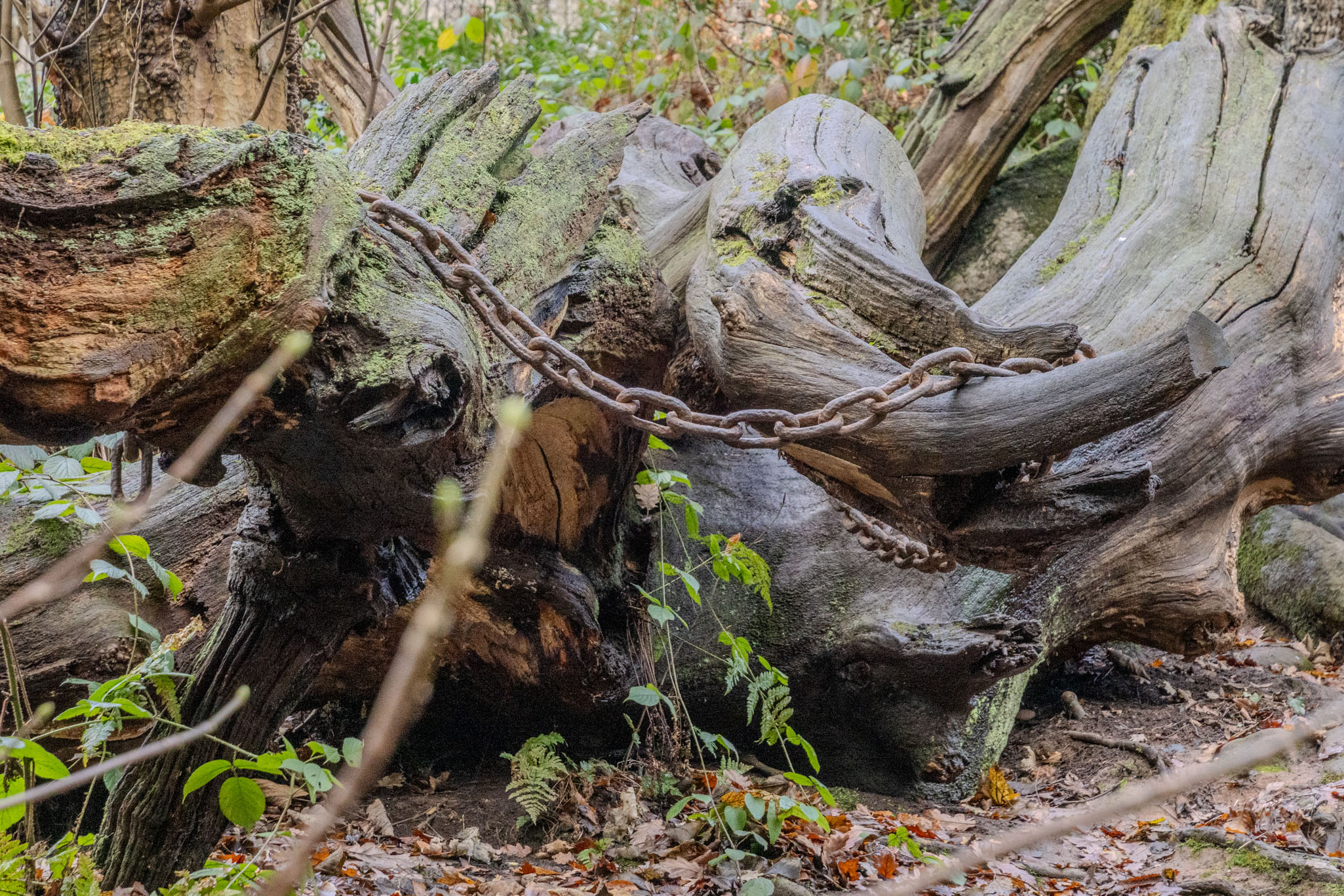
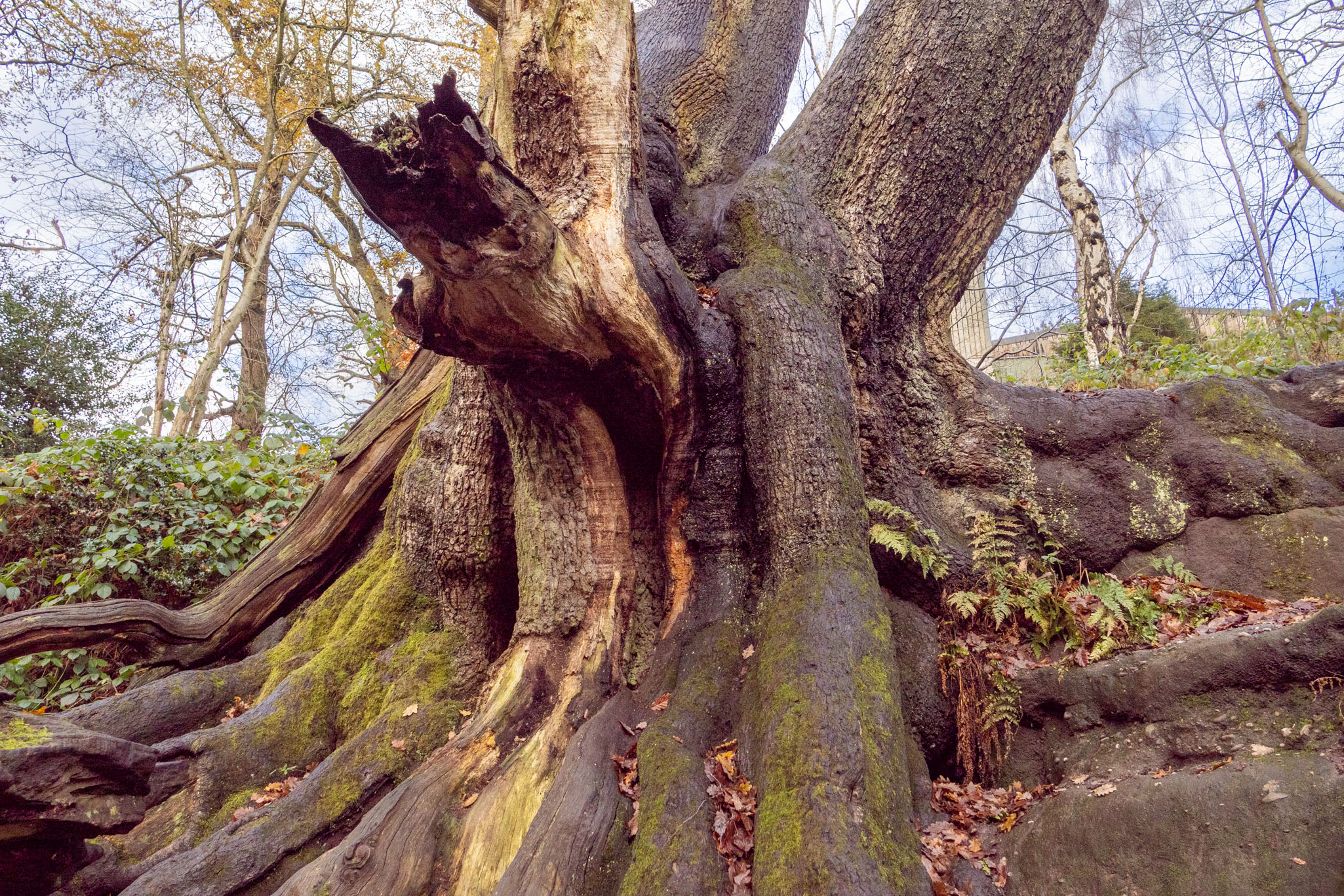
On the steep rise above Alton, where the old carriage road bends into shadow, stands one of Staffordshire’s most unsettling landmarks. The Chained Oak is a monstrous silhouette—its limbs twisted like the fingers of a giant caught mid-reach, each one bound tightly beneath coils of rusted iron. Visitors often stop, puzzled by the sight. Locals rarely stop at all.
Even in daylight, the grove feels colder. In the evening, the air thickens, and the chains seem to shift with a slow metallic sigh, as though something beneath the bark is testing its restraints.
The Beggar on the Road
The darkest legend begins on a storm-darkened night in the early 1800s. The Earl of Shrewsbury was returning to Alton Towers by carriage when a lone figure stepped into the road. She was small and bent with age, her eyes clouded but unblinking. She raised a trembling hand and asked the Earl for a single coin.
The driver attempted to shoo her away, but she didn’t move.
Annoyed, the Earl refused her request and ordered the carriage onward.
That was when she spoke the words that curdled the blood of all who heard them.
“For every limb that falls from the great oak, a life from your house shall fall with it.”
Her voice was cracked, but her certainty was sharp as a blade. Before anyone could react, thunder rolled through the forest, and a branch from the nearby oak—huge, heavy, ancient—snapped clean off and crashed to the ground.
By the time the carriage reached the Towers, a messenger was waiting with terrible news: a member of the Earl’s family had died suddenly within that very hour.
The Earl’s Terror
Over the following months, the Earl lived in dread. Servants said he rarely slept. He refused to travel at night. He would wake at the slightest creak of timber or crack of wind. For every storm that passed over the valley, he paced the halls of Alton Towers, sweating and pale, waiting for the next sound of splitting wood.
And then, one night, a second branch fell—again with no warning, no wind, nothing but the soft moan of the valley.
And again, within hours, another family member died.
Whether coincidence or curse, the Earl became convinced the beggar’s words were real. He demanded the tree be restrained—bound, locked, chained so tightly that no further limb could ever break away.
The Chaining of the Oak
At dawn, the Earl sent a team of workers into the forest carrying iron chains, spikes, and heavy tools. They approached the great oak with fear in their throats, for even then its enormous limbs hung over them like a thing alive.
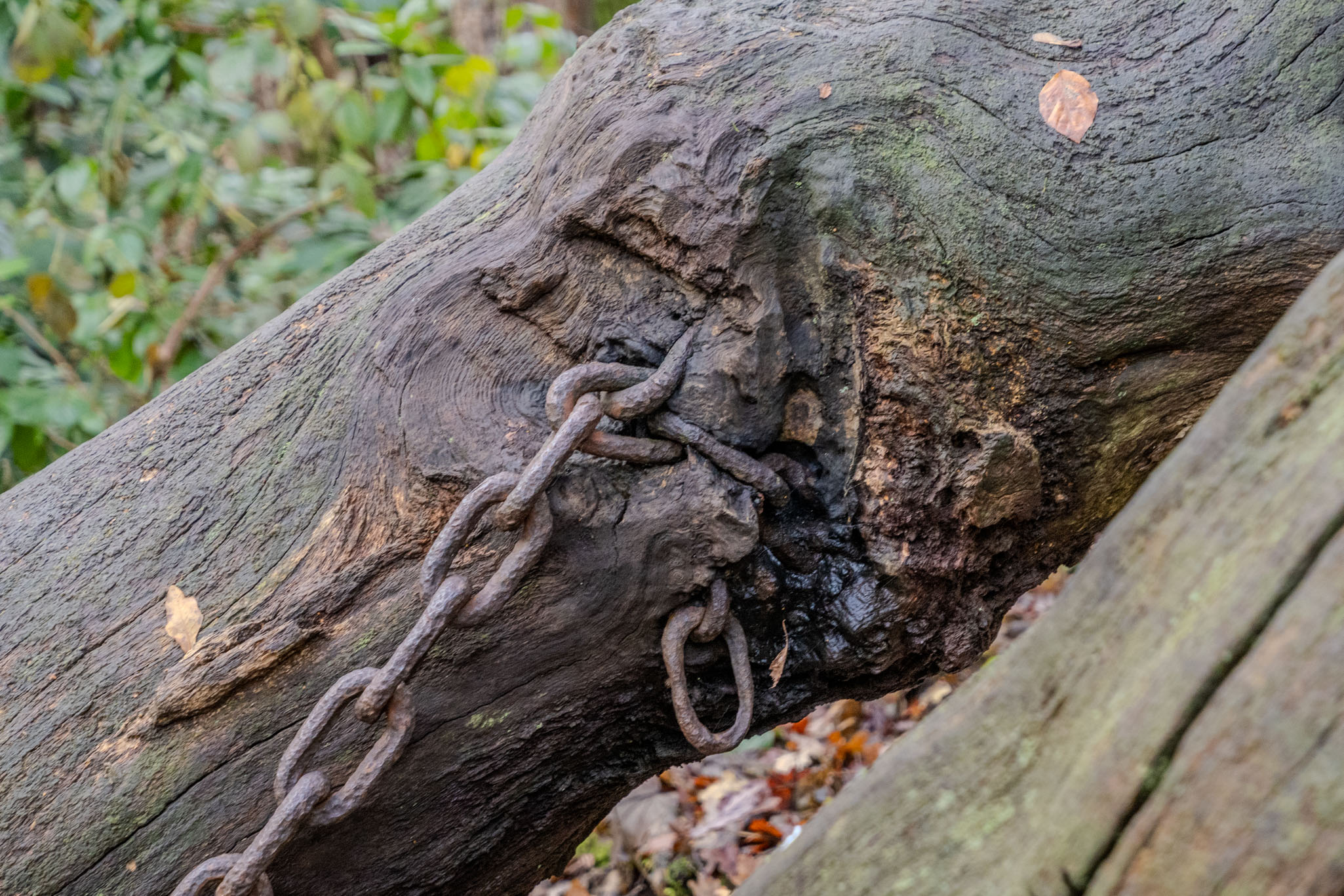
The Earl himself stood watch as the men hammered the chains deep into the bark. Each strike of the mallet rang through the woodland like a funeral bell. The iron bit into the timber. Rust stained the roots like old blood. Some workers insisted they heard low groans vibrating up through the trunk, as if the tree resisted every link.
When the final chain was tightened, the grove fell silent—unnaturally so, as though the forest were holding its breath.
The Earl returned to his estate, certain he had locked the curse away.
But the locals still say the oak only slept. It never forgot.
The Truth Behind the Folklore
The Historical Legend
The famous story tied to the Chained Oak revolves around an Earl of Shrewsbury who refused a beggar woman a coin. She cursed him, declaring that every time a branch fell from the oak, a member of his family would die. In fear, the Earl supposedly ordered the tree to be chained.
Historians disagree on which Earl:
- likely the 15th Earl (early 1800s)
- or 16th Earl (mid-1800s)
No written record confirms the curse ever happening—but folklore rarely needs paperwork.
Why the Chains Were Really Added
The practical explanation is almost certainly simpler:
- The tree is several centuries old.
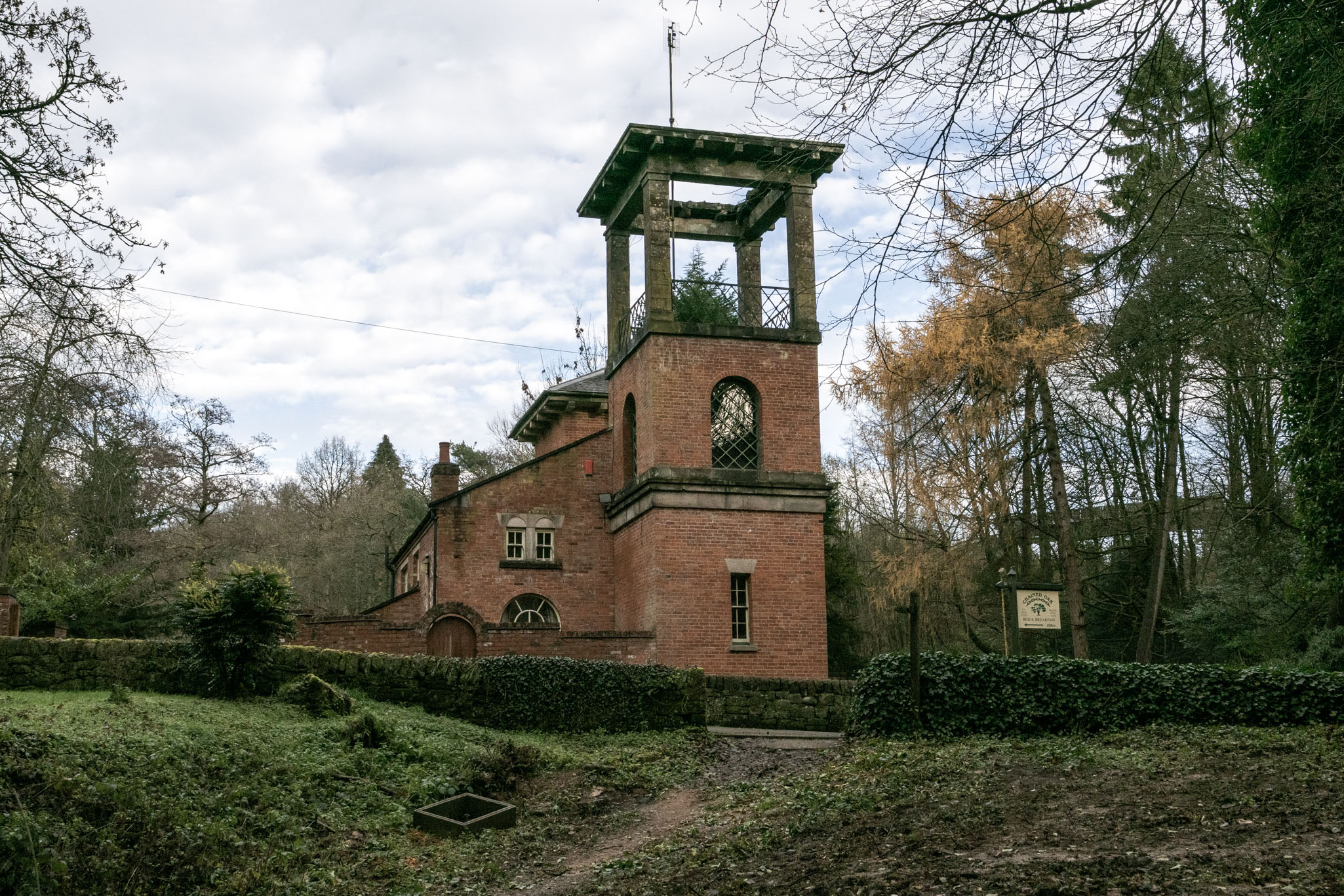
- It stands beside what was once a carriage route to Alton Towers.
- Heavy chains were probably added in the 19th century to support failing limbs and prevent them falling dangerously on the path.
Its eerie look did the rest—folklore formed naturally around it.
What “Hex” Means in This Story
In old Staffordshire dialect and wider English folklore, a hex is a dark, intentional spell cast to bring misfortune. It usually involves:
- A spoken curse delivered at the moment of anger
- A supernatural consequence tied directly to the wrong committed
- A sense that the curse cannot be undone — only managed or contained
Modern Footnotes
- A major limb did fall in April 2007, reigniting interest in the story.
- The tree was nominated for the Woodland Trust’s Tree of the Year 2020.
- The Oak became the basis of Hex – The Legend of the Towers at Alton Towers, cementing its place in Staffordshire’s darker heritage.
Useful Information:
- 🌎 Location: Near Alton village, Staffordshire, England
- ℹ️ Details: A roughly 700-year-old English oak tree bound in heavy iron chains
- 🏡 Nearby landmark: Alton Towers Resort
- ⏰ Opening hours: Open 24 hours
- 🅿️ Parking: Free parking in the lay-by opposite the B&B.
- 📍 Satnav: Farley Lane, Alton, ST10 4BZ
- 🧭 Coordinates: 52.986712, -1.898280
- 💬 Access tip:
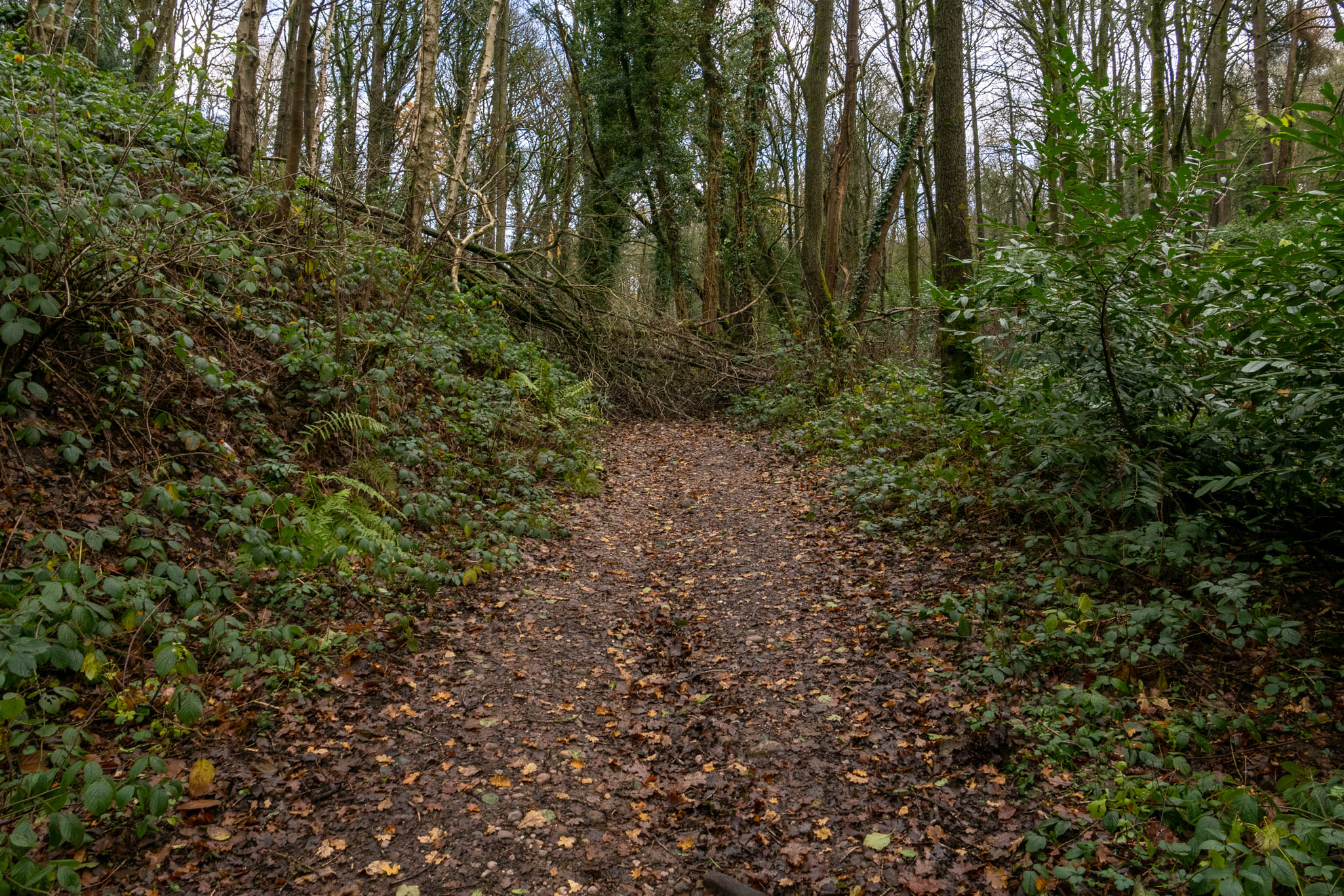
- The tree is located on the Barbary Gutter Trail within Dimmingsdale woods – From the Lay-by cross the road and look for the cut out through the wall, walk down for around 10 minutes and the tree will be on your right hand side.
- . The path can be very muddy & slippery, so wear appropriate footwear.
- 🌐 Official link: Churnet Valley Guide – The Chained Oak
Related Posts:
- Mi Amigo: Remembering the 1944 Sheffield Crash at Endcliffe Park
- The Chained Oak of Alton: Dark Folklore, Real History & the Legend Behind the Chains
- The Forgotten Spirits of Edinburgh Castle
- The Story of Greyfriars Bobby, Edinburgh’s Most Loyal Dog
- The Legend of Molly Leigh — The Burslem Witch
Related Tags:
Dark History Dark Tourism Disaster Sites Folklore True Crime Unsolved Mysteries