
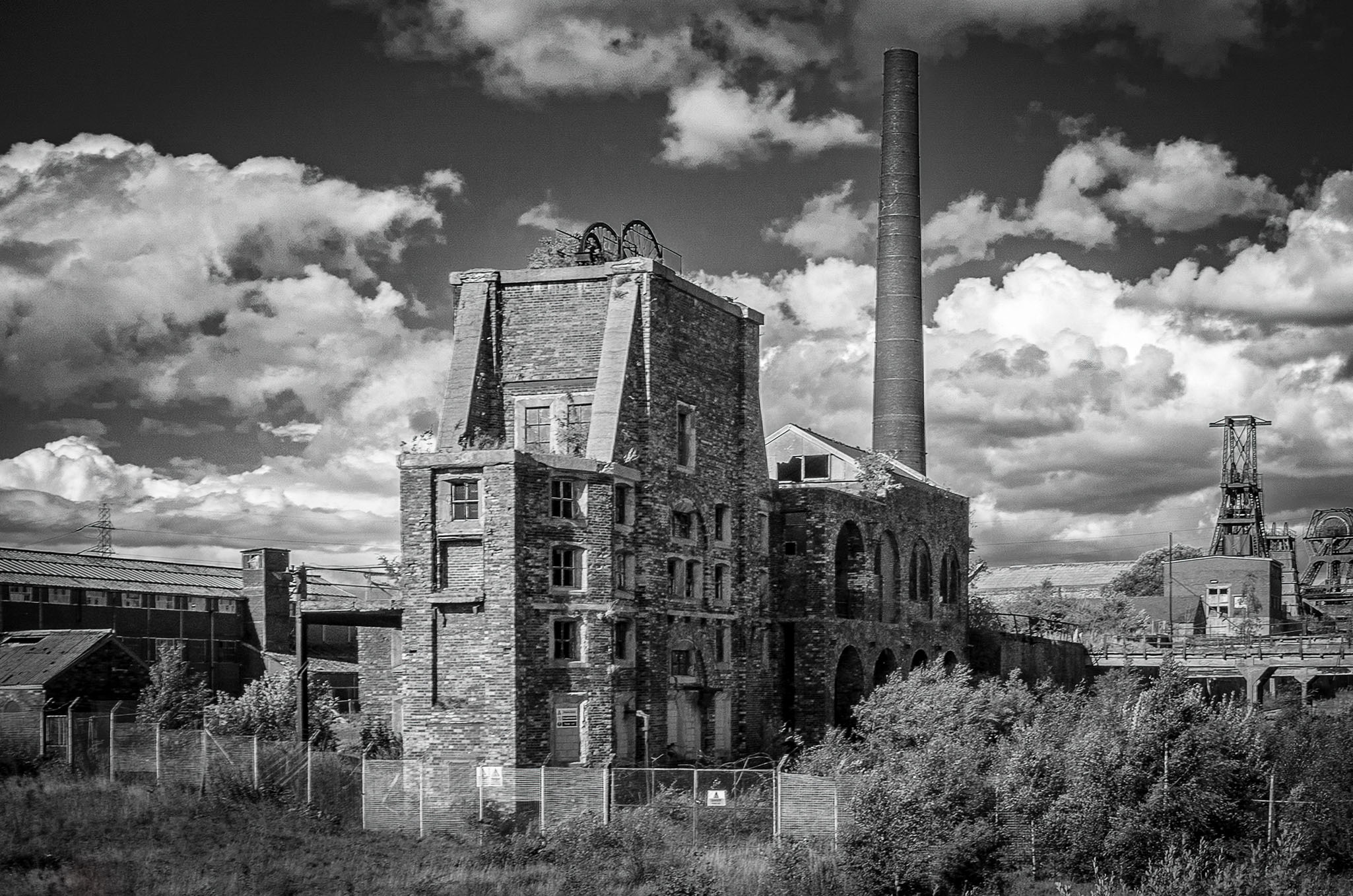
The vast complex of Chatterley Whitfield once rang with the roar of machinery, the hiss of steam pipes, and the constant thunder of men and metal moving underground. For more than a century, this was a place of relentless motion, where shift whistles dictated life itself and the earth was cut open day after day. Today, the great headgear towers loom like skeletal sentinels against the Staffordshire sky—rusting, broken, and silent. Their iron frames creak in the wind, as though remembering the weight they once bore. When you approach the site, there is an immediate sense that this ground has absorbed something human: sweat, fear, endurance, and death. The air feels heavy, as if the land itself is reluctant to forget.
Descending into the history of Chatterley Whitfield is to confront the realities of industrial survival. Men and boys went down into the shafts before dawn, faces already blackened, lungs filling with dust that would never fully leave them. The threat of collapse, fire, or gas was constant, but rarely spoken aloud. The pit was not simply a workplace; it was a gamble repeated daily. Families waited above ground knowing that a shift could end in silence instead of return. Every structure still standing seems to echo those unspoken anxieties.
The darkest chapter came on the bitter morning of 7 February 1881. A fire ignited deep underground and exploded with catastrophic force, tearing through the workings and racing along the tunnels like a living thing. The blast was heard miles away, and flames erupted from the up-cast shaft, shooting into the sky like a furnace unleashed. Between 21 and 24 men and boys were killed, though the exact number was never fully resolved. Some bodies were never recovered at all. In flooded passages, rescuers later found grim remnants: skulls, scattered bones, and a single boot still containing a foot. These were not just casualties; they were men erased by the mine they served.
From that moment, Chatterley Whitfield carried a shadowed reputation. Even as production continued and the mine expanded into one of the most significant collieries in Britain, the memory of that fire lingered like smoke trapped in stone. Workers spoke quietly of uneasy feelings underground, of sudden cold patches and strange sounds that could not be explained by shifting timbers or machinery. Long after the pit fell silent, visitors and explorers began reporting footsteps in corridors where no one stood, the distant clang of pick-axes from sealed tunnels, and oppressive chills in the old lamp-house where miners once collected their lamps before descending into the earth. One account describes the brief apparition of a miner in full gear, seen only for a heartbeat before dissolving into shadow.
When production finally ceased in 1977, the closure felt less like an ending and more like abandonment. The site later became a museum, but by 1993 even that role faded. Underground workings flooded, metal corroded, timber supports softened and collapsed, and vegetation forced its way through brick and concrete. Nature began to reclaim the pit, but it did so unevenly, leaving behind an uneasy blend of decay and preservation. In the dark water filling the shafts, some say there is more than reflection. It is as if the stillness holds memory, mirroring fears and voices that never reached the surface.
Today, Chatterley Whitfield offers a rare and unsettling experience. It is not merely a heritage site or industrial ruin. It is the skeletal remains of Britain’s first colliery to produce over a million tons of coal in a single year, standing as proof of both technological triumph and human cost. The remembrance garden and heritage centre at the entrance attempt to frame the story with dignity, but beyond them lie derelict headstocks, sealed drifts, and buildings hollowed out by time. The silence here feels deliberate, almost watchful.
At dusk, the atmosphere deepens. Rusted towers cut jagged silhouettes against a fading sky, and shadows pool in doorways that once funneled men toward the underground. Urban explorers whisper their accounts online, adding layers to the site’s mythology. “If you listen closely, you can hear the pick of the miner long gone,” one wrote. Whether imagination or something more, the feeling is undeniable. The site is steeped in grief, memory, and the fine dust of lives extinguished beneath the ground.
To visit Chatterley Whitfield is a symbolic act. It is standing at the threshold of an industrial underworld, acknowledging the labour that powered a nation and the lives it consumed in return. In the darkness of the sealed shafts, in the hollow rooms of the lamp-house, the site poses a quiet question. Do we remember the men who went down and did not return? And if we do remember, are we truly listening to what still lingers here, beneath the rust and silence?
Useful Information:
- 🌎 Location: Chatterley Whitfield Colliery, Chell, Stoke-on-Trent, Staffordshire, England.
- ℹ️ Details: A former coal mine and industrial complex, once the largest and most advanced colliery in Britain, and the first to produce over one million tons of coal in a single year. The site is closely associated with major industrial accidents, including the deadly underground fire and explosion of 7 February 1881.
- ✨ Signature Feature: Vast rusting headgear towers and derelict industrial buildings.
- 🏢 Central Landmark: Chatterley Whitfield Colliery headstocks and winding gear.
- 📍 Satnav: Chatterley Whitfield Colliery
- 🧭 Coordinates: 53.07735754293213, -2.1751090332617986
- 🅿️ Parking: Limited on-site parking available near the heritage centre.
- 🌐 Official Link: Wikipedia
Related Posts:
- Visiting the Site of Princess Diana’s Final Moments: Pont de l’Alma
- The Three Amigos of Motörhead: A Dark Tourism Pilgrimage
- From First Gig to Dark Pilgrimage: My Motörhead Experience in Stoke-on-Trent
- Coventry Blitz 1940: The Night the Cathedral Burned
- The Silent Shafts of Chatterley Whitfield and the Men Who Never Returned
Related Tags:
Dark History Dark Tourism Disaster Sites Folklore True Crime Unsolved Mysteries