

The Coventry Blitz and the Destruction of the Cathedral
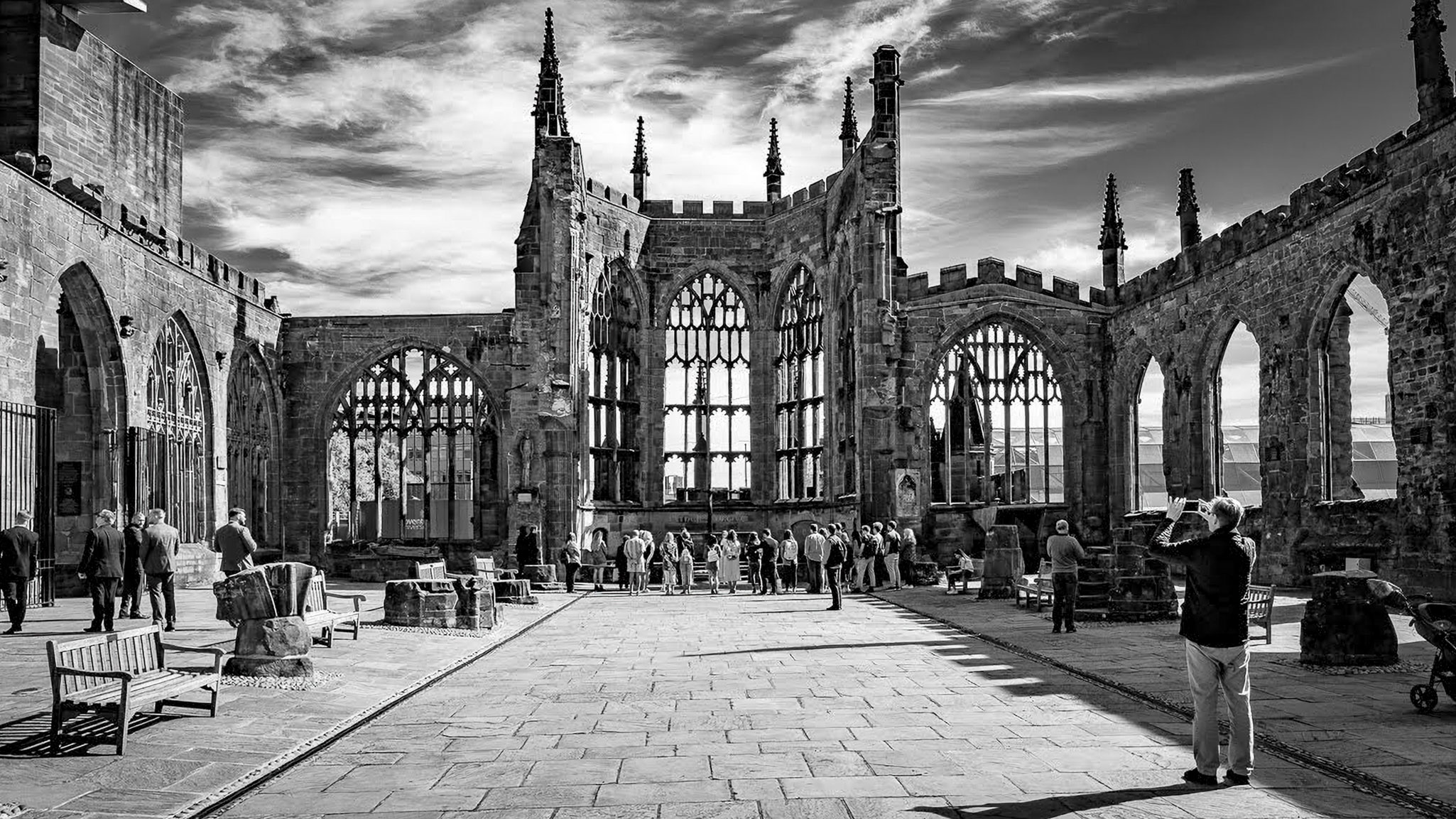
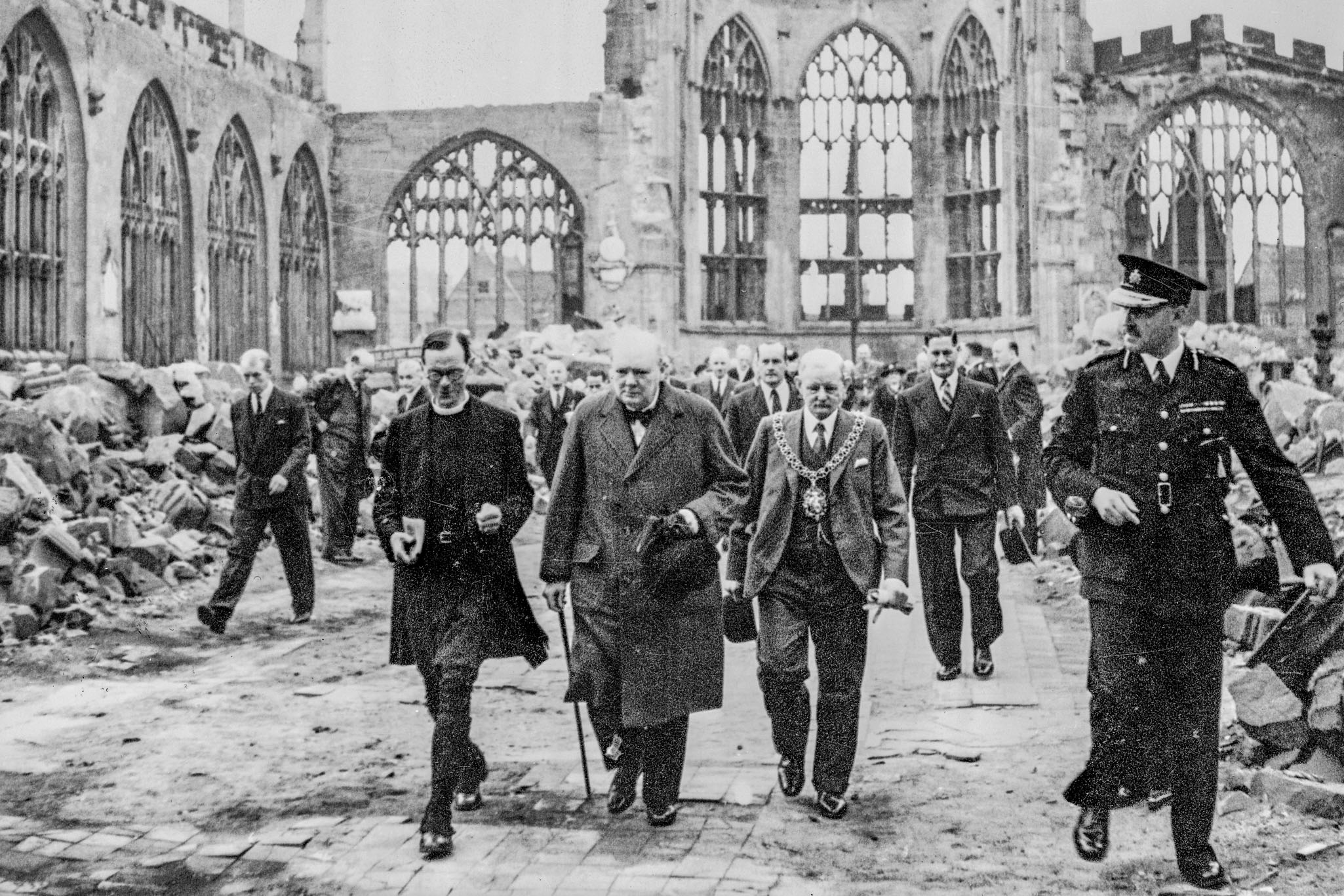
During World War II, Coventry Cathedral was devastated during a massive German air raid on the night of 14 November 1940, an attack that became known as the Coventry Blitz. The operation, codenamed “Moonlight Sonata,” targeted the city with relentless precision and overwhelming force. Medieval St Michael’s Church, which had stood at the heart of Coventry since the late Middle Ages, was struck by incendiary bombs and consumed by fire. In the aftermath, the decision was made to leave the ruins standing as a permanent memorial to the destruction of war and the cost paid by civilians.
Why Coventry Was Targeted
Coventry was a vital centre of Britain’s wartime industry, producing aircraft engines, munitions, and other essential military equipment. This industrial importance made the city a prime target for the Luftwaffe. German bombers aimed not only to destroy factories but also to break civilian morale. “Operation Moonlight Sonata” involved more than 500 aircraft and continued for around 11 hours, making it one of the most concentrated attacks on any British city during the Second World War.
The Night of the Raid
On the evening of 14 November 1940, waves of German bombers crossed the city under a clear, moonlit sky. High-explosive bombs were dropped early in the raid, severing water mains, power lines, and damaging rooftops across Coventry. This deliberate tactic crippled emergency services and made it almost impossible to control the fires that followed. As the night progressed, thousands of incendiary bombs rained down, igniting buildings across the city and turning streets into burning corridors of destruction.
The Cathedral in Flames
Coventry Cathedral was struck by several incendiary devices, with fire breaking out at around 8:00 pm. Volunteers known as the Cathedral Guard attempted to extinguish the flames, but the scale of the attack quickly overwhelmed them. Built between the late 14th and 15th centuries, the medieval church was constructed largely of wood and stone, materials that proved tragically vulnerable. As fires spread unchecked, a firestorm took hold, and the cathedral was reduced to a roofless shell, its tower and outer walls standing amid the ruins.
The Firestorm
The raid introduced a devastating new bombing strategy. High-explosive bombs were used to expose buildings and disrupt services, followed by tens of thousands of incendiaries designed to ignite fires across a wide area. At Coventry Cathedral, these fires merged into an uncontrollable inferno. The intense heat created its own wind system, drawing in oxygen and spreading flames rapidly. By midnight, much of the city centre was ablaze, and the cathedral was beyond saving.
The Aftermath and Legacy
At dawn, the scale of the destruction became clear. The Dean of Coventry wrote the words “Father Forgive” on the cathedral’s sanctuary wall, a powerful and enduring message of reconciliation. It was soon decided that the ruins would remain untouched as a memorial, while a new cathedral would be built alongside them. Across the city, approximately 568 civilians were killed and more than 1,200 injured. Tens of thousands of homes were damaged or destroyed, along with historic buildings, shops, and civic centres. The ruins of Coventry Cathedral became a symbol of suffering, resilience, and a commitment to peace.
Little-Known Facts About the Coventry Blitz
- The raid on Coventry was the single most concentrated attack on any British city during the Second World War.
- After the attack, Nazi propagandists coined the German word “coventrieren,” meaning to raze a city to the ground.
- Codenamed “Moonlight Sonata,” the raid lasted 11 hours and involved nearly 500 Luftwaffe bombers drawn from airfields across occupied Europe.
- The primary aim was to destroy Coventry’s war production capabilities, and it has been suggested the raid was also ordered by Hitler as revenge for an RAF attack on Munich.
- The night was so brightly moonlit that traffic could move through the city without headlights.
- The Luftwaffe dropped around 500 tons of high explosive, 30,000 incendiary bombs, and 50 parachute mines, while also testing a new exploding incendiary weapon.
- Coventry lost not only its medieval cathedral, the only English cathedral destroyed in the war, but also its central library, market hall, hundreds of shops, and historic Palace Yard.
- The heat and smell of the burning city reached German bomber crews flying at 6,000 feet above Coventry.
- More than 43,000 homes, over half of the city’s housing stock, were damaged or destroyed.
- The fire at the Daimler works was one of the largest industrial blazes in Britain during the war, with 15 acres of factory buildings turned into an inferno.
- By midday the next day, the city was almost dark due to smoke, yet unusually warm because of lingering firestorms.
- King George VI is said to have wept as he stood among the ruins of the cathedral.
- Many survivors wandered the streets in shock, while children were seen attempting to burrow into brick walls to escape the noise of the bombing.
- One of Coventry’s Peeping Tom statues was blown from its niche and mistaken for a human body in the blackout.
- A witness recalled fleeing from a knee-high river of boiling butter flowing from a burning dairy.
- An abandoned tram was blown over a house and landed intact in a nearby garden.
- The official death toll was recorded as 554, though the true figure may have been higher due to unaccounted victims.
- Demolition crews were initially stopped from pulling down the cathedral tower, unaware it had been leaning for over a century.
- Fighter patrols were flown over the city during mass funerals in case of a follow-up attack on the cemetery.
- By 1947, Coventry had adopted Kiel as its first German twin city, followed by Dresden in 1956, with the ruined cathedral becoming a global symbol of peace and reconciliation.
Useful Information:
- 🌎 Location: Coventry, West Midlands, England
- ℹ️ Details: The Coventry Blitz took place on the night of 14 November 1940 during World War II, when the city was subjected to an intense Luftwaffe bombing raid codenamed Operation Moonlight Sonata. The attack caused widespread destruction, killing hundreds of civilians and devastating much of the historic city centre, including the medieval Coventry Cathedral.
- ✨ Signature Feature: The preserved ruins of Coventry Cathedral, left standing as a powerful memorial to the destruction of war and a lasting symbol of peace and reconciliation.
- 🏢 Central Landmark: Coventry Cathedral Ruins (St Michael’s Cathedral), standing alongside the modern Coventry Cathedral.
- 📍 Satnav: Coventry Cathedral
- 🧭 Coordinates: 52.40874044872752, -1.5068473258750543
- 🅿️ Parking: Public car parks available nearby.
Related Posts:
- Visiting the Site of Princess Diana’s Final Moments: Pont de l’Alma
- The Three Amigos of Motörhead: A Dark Tourism Pilgrimage
- From First Gig to Dark Pilgrimage: My Motörhead Experience in Stoke-on-Trent
- Coventry Blitz 1940: The Night the Cathedral Burned
- The Silent Shafts of Chatterley Whitfield and the Men Who Never Returned
Related Tags:
Dark History Dark Tourism Disaster Sites Folklore True Crime Unsolved Mysteries