
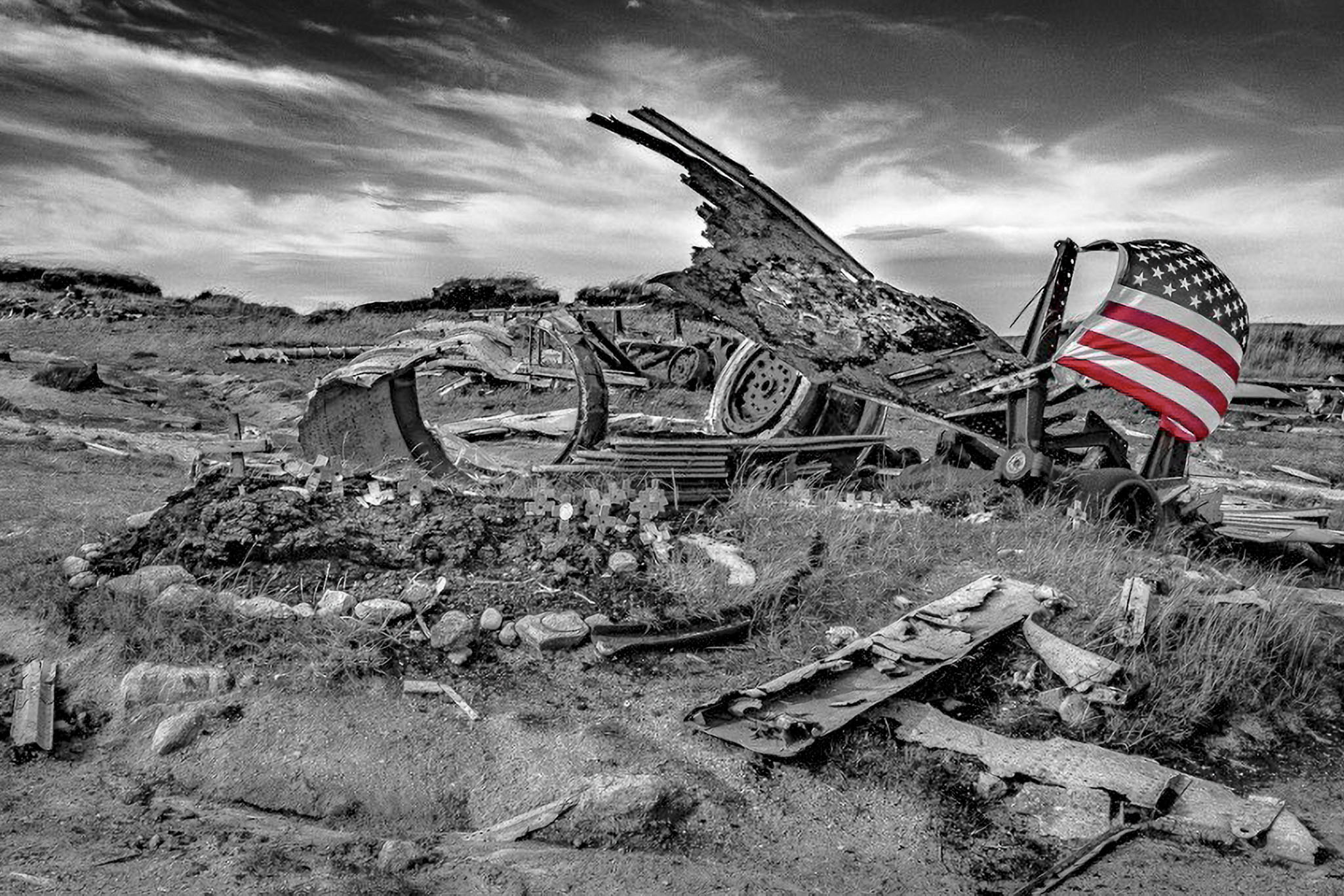
High on Bleaklow Moor in the Peak District, fragments of twisted aluminium still lie scattered across the peat and stone. Exposed to wind, rain, and time, they mark the site of one of the region’s most haunting aviation tragedies. On 3 November 1948, a United States Air Force aircraft failed to clear the high ground near Higher Shelf Stones, claiming the lives of all thirteen men on board. The crash would leave a permanent scar on the moorland and a lasting legacy for the families and rescuers connected to it.
The aircraft involved was a specially modified Boeing B-29 Superfortress, adapted for photographic reconnaissance work. Its bomb bays had been reconfigured to carry advanced camera equipment rather than weapons, and it was given the fitting name “Overexposed”, a reference to the photographic nature of its mission. Although the Second World War had ended three years earlier, military flying remained hazardous, particularly over high ground in poor weather. Bleaklow Moor, frequently shrouded in cloud, had already earned a grim reputation among aircrews.
3 NOVEMBER 1948
At 10:15 a.m. on Wednesday, 3 November 1948, “Overexposed” took off from RAF Scampton near Lincoln. Its destination was the United States Air Force base at RAF Burtonwood, near Warrington. On board were eleven crew members and two additional military passengers.
The flight was considered routine. One of its primary purposes was the delivery of military wages to personnel stationed at RAF Burtonwood. As the aircraft headed west, weather conditions steadily worsened. Thick cloud formed over the Peak District, reducing visibility to near zero and forcing the crew to rely entirely on their instruments.
At the controls were pilot Captain Landon P. Tanner and his co-pilot, Captain Harry Stroud. Believing they had already cleared the high ground around Higher Shelf Stones, the crew began a controlled descent in an attempt to break through the cloud layer and regain visual contact with the ground below.
Shortly after 11:00 a.m., disaster struck. Still enveloped in cloud, the aircraft flew directly into the moorland at an estimated speed of 220 miles per hour. The impact was catastrophic. The aircraft was instantly engulfed in flames, leaving no chance of survival. All thirteen men on board were killed.
When the aircraft failed to arrive at RAF Burtonwood as scheduled, concern quickly turned to alarm. The RAF Mountain Rescue Service was mobilised, and search operations were directed towards the high, remote moors of the Peak District.
By chance, the RAF Harpur Hill Mountain Rescue team was already in the area, taking part in a routine training exercise. They immediately diverted towards Bleaklow Moor to assist in the search. As daylight faded, at approximately 4:30 p.m., the team located the crash site. Wreckage was scattered widely across the moor, a stark indication of the force of the impact. Only the aircraft’s tail section remained largely intact, standing upright as a silent marker against the bleak landscape.
At first light the following morning, recovery operations began. The bodies of the thirteen victims were carefully retrieved and later transported to RAF Burtonwood. The aircraft had been carrying $7,400 in military wages. Remarkably, the money survived the intense fire and was recovered intact by American military police, who returned it to the base.
THE ONBOARD CREW MEMBERS
- Pilot – Captain Landon P. Tanner
- Co-Pilot / Engineer – Captain Harry Stroud
- Navigator – Technical Sergeant Ralph Fields
- Radio Operator – Sergeant Charles Wilbanks
- Radio Operator – Sergeant David Devere Moore
- Radar Operator – Sergeant Gene A. Gartner
- Technical Sergeant – Saul R. Banks
- Camera Crew – Sergeant Donald R. Arbogast
- Camera Crew – Sergeant Robert I. Doyle
- Camera Crew – Private William M. Burrows
Additional Personnel
- Captain Howard Keel – 4201st Motion Picture Unit
- Corporal George Ingram – Photographic Advisor
- Corporal M. Franssen – Passenger
CAPTAIN TANNER’S WEDDING RING
In the 1970s, many years after the crash, a local man from Hadfield named Gerry Scarratt made a poignant discovery while walking on Bleaklow Moor. Among the scattered remains of the aircraft, he found Captain Tanner’s wedding ring.
Determined to see the item returned to the family, Scarratt succeeded in tracing Captain Tanner’s daughter, Jean, and personally returned the ring to her. The gesture provided a deeply moving connection between the remote crash site and the family who had lived with the loss for decades.
THE AIRCRAFT
“Overexposed” was a reconnaissance variant of the Boeing B-29 Superfortress, one of the largest and most advanced aircraft of the Second World War. Designed for long-range missions at high altitude, the B-29 represented a major leap in aviation technology and continued to serve in the years following the war, including during the Korean conflict.
The aircraft type holds a unique and sombre place in history. The B-29 remains the only aircraft to have delivered nuclear weapons in combat. On 6 August 1945, “Enola Gay” dropped the first atomic bomb, Little Boy, on Hiroshima. Three days later, on 9 August 1945, “Bockscar” released the second bomb, Fat Man, over Nagasaki.
Today, the scattered wreckage on Bleaklow Moor stands as a quiet memorial to the thirteen men who lost their lives aboard “Overexposed”. Exposed to the elements and slowly reclaimed by the landscape, it serves as a lasting reminder of the risks faced by aircrews and the enduring human cost of military aviation, even in peacetime.
Heritage Walk – “Overexposed” Crash Site from Snake Pass
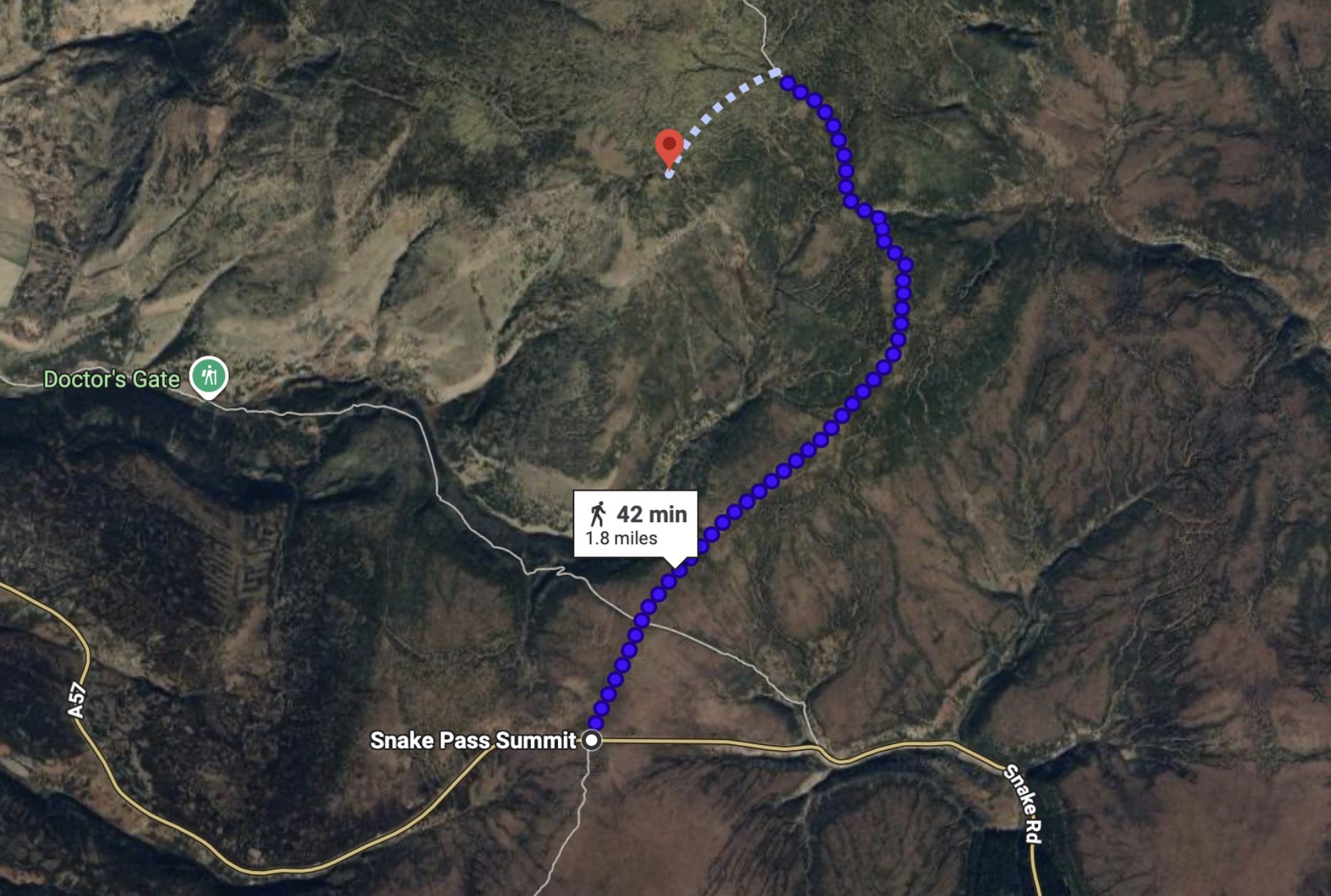
Take a scenic heritage walk across Bleaklow Moor from the A57 Snake Pass summit lay-by near Glossop, reaching the historic site of the 1948 “Overexposed” crash. This walk combines panoramic Peak District views with a poignant connection to aviation history, without overwhelming the route details.
Quick Facts
- 📍 Start Location: Lay-by at the A57 Snake Pass summit, near Glossop
- 🧭 Grid Reference (Crash Site): SK 113 953
- 🚶 Distance: ~3–4 miles round trip
- ⚠️ Terrain: Open moorland, uneven ground, peat bogs, occasional steep sections
- 🌫️ Weather: Changeable; low cloud and fog are common
- 🥾 Gear: Waterproof boots, warm layers, water & snacks
- 🕊️ Respect: Aircraft remains are protected; do not disturb or remove
- ⏱️ Time Required: 2.5–4 hours depending on pace and conditions
- 📸 Photography: Moorland panoramas and historic site; maintain safe distance
Route Highlights
- 🟢 Start: From the Snake Pass lay-by, follow the Pennine Way north-east across open moorland.
- 🏞️ Moorland Trek: The path traverses rolling, exposed moorland. Watch for peat bogs and uneven surfaces, especially after rain.
- 📍 Crash Site Ridge: After ~1.5–2 miles, reach the ridge near Higher Shelf Stones, where remnants of the 1948 B-29 crash, “Overexposed,” can be seen. The site is a protected memorial — please stay on paths and avoid debris.
- 🔄 Return: Retrace your steps to the lay-by, enjoying sweeping views across the Peak District.
Heritage Note
The “Overexposed” crash site serves as a quiet memorial to the thirteen aircrew who lost their lives in 1948. The B-29 Superfortress was on a routine flight when it struck the moorland. Today, the scattered wreckage and surrounding moorland create a reflective and historically significant stop along the walk.
Top Tips
- 🌦️ Check the weather; fog and low cloud can appear suddenly.
- 🗺️ Bring a map and compass; mobile signal is limited.
- 🥾 Wear waterproof boots and dress in layers.
- 📸 Respect the memorial site; take photos without touching wreckage.
Useful Information:
- 🅿️ Satnav: Lay-by Parking
- 🌐 Official Link: Wikipedia
Related Posts:
- Mi Amigo: Remembering the 1944 Sheffield Crash at Endcliffe Park
- The Chained Oak of Alton: Dark Folklore, Real History & the Legend Behind the Chains
- The Forgotten Spirits of Edinburgh Castle
- The Story of Greyfriars Bobby, Edinburgh’s Most Loyal Dog
- The Legend of Molly Leigh — The Burslem Witch
Related Tags:
Dark History Dark Tourism Disaster Sites Folklore True Crime Unsolved Mysteries