
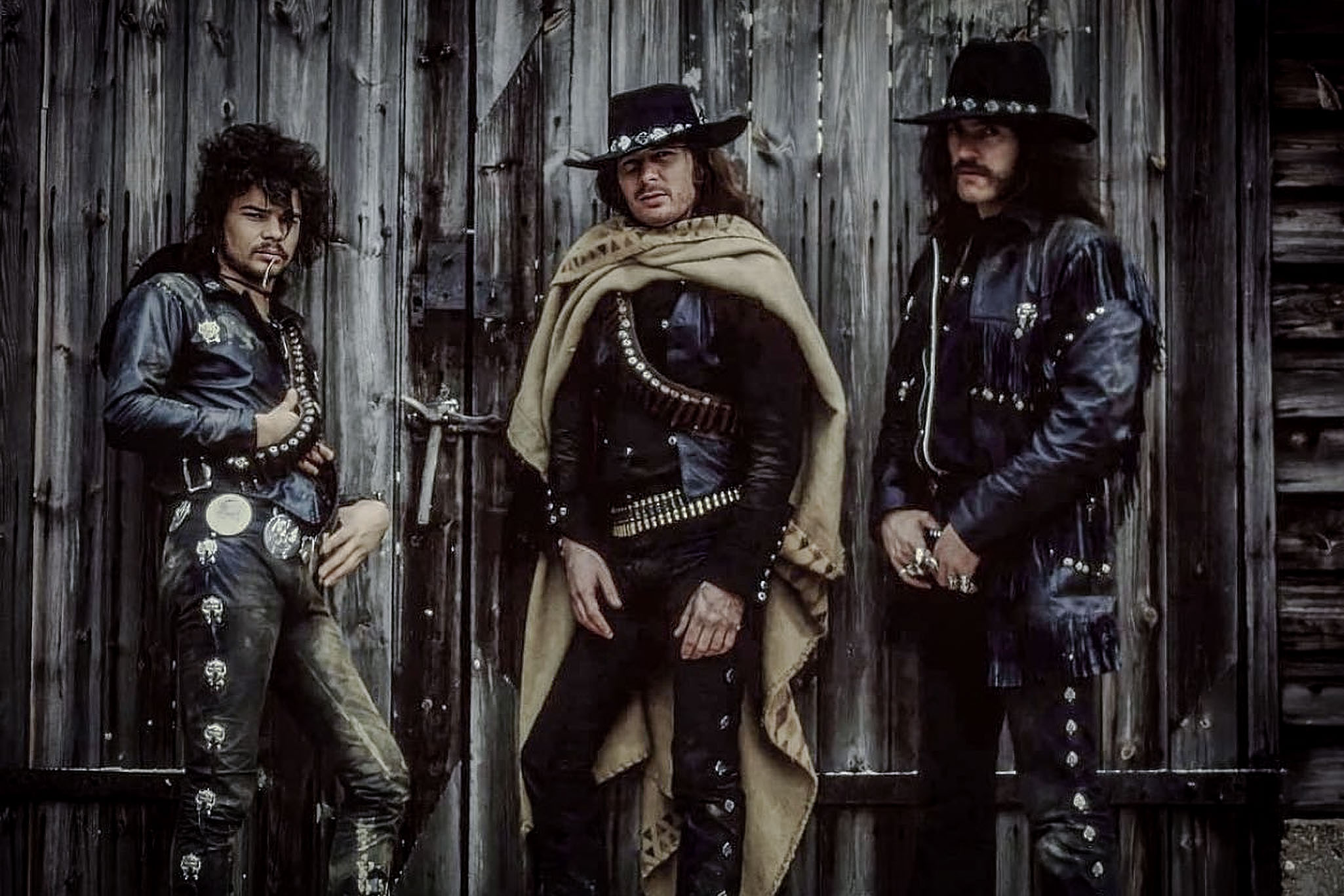
Motörhead were more than a band. They were legends of rebellion, chaos, and unrelenting sonic fury, and their lives and deaths continue to draw fans into a pilgrimage of the unusual, the mythical, and the dark. Lemmy Kilmister, Phil “Philthy Animal” Taylor, and Fast Eddie Clarke — the classic trio — were hell-raisers, outlaws of sound, and icons of a lifestyle that blurred the line between myth and reality. Their story is the perfect fit for dark tourism: a journey through cemeteries, memorials, and haunted memories of rock ’n’ roll excess.
The Hell-Raiser Persona
From the very beginning, Motörhead’s image was dark and unmistakable. Clad in spaghetti Western attire, leather, and studs, they projected the aura of modern-day outlaws. Their music was a relentless assault: bass rattling like a war drum, drums pounding in mechanical fury, and guitars screaming in defiance. Every live show became a ritual of chaos, a temporary temple of noise where the boundaries of order and madness dissolved.
Off-stage, the legend only grew darker. Tales of hallucinatory drug experiences, wild road stories, and near-mythical stamina on tour fed into a cult of personality. Lemmy’s infamous brush with atropine sulfate led to vivid hallucinations where he conversed with invisible entities, while rumours of morally grey adventures in Thailand, and wild nights in strip clubs and bars, further cemented their outlaw status. Fans aren’t just visiting memorials — they are stepping into a world that embraced danger, debauchery, and the extraordinary.
The Pilgrimage Map
Lemmy Kilmister: His spirit is immortalised in Burslem, Stoke-on-Trent, where a 2.25-meter dark bronze statue by Andy Edwards contains part of his ashes. The unveiling of the statue was a procession of roaring motorcycles — a modern-day ritual marking the passage of legend into memory.
Phil Taylor: The powerhouse drummer rests in Hasland Cemetery, Derbyshire — a quiet but sacred site for those seeking to pay tribute to the man who drove Motörhead’s relentless heartbeat.
Read more about visiting Phil Taylor’s grave
Fast Eddie Clarke: Guitarist of the classic lineup, resting in Los Angeles, completes the trio. Though physically distant, his legend continues to attract fans worldwide, forming a map of devotion across continents.
Vist TBA
Each site is a waypoint, an invitation to explore the lives of men who lived on the edge, embraced excess, and defied mortality in life and legend. Visiting these locations is a journey into the shadows of rock ’n’ roll, a form of dark tourism that blends history, myth, and ritual.
The Dark Legacy of Motörhead
The band’s influence goes beyond music. They embodied rebellion, the allure of the outlaw, and the seductive pull of the chaotic. For fans, retracing their steps — through cemeteries, statues, and the venues they conquered — is not just homage, but immersion into a life that flirted with danger at every turn.
Motörhead’s story resonates with dark tourism audiences because it combines myth, mortality, and place. Each memorial, grave, and relic acts as a shrine, where fans can confront both the legend and the stark reality of life on the edge. These are not sanitized museum exhibits — they are sites charged with history, ritual, and memory.
RIP “The Three Amigos” — Lemmy, Phil, and Fast Eddie. Your legend lives on, and the pilgrimage continues.
Useful Information:
- 🌐 Official Link: Motorhead.com
- 🌐 Wikipedia: Motorhead
- 🌐 Wikipedia: Lemmy
- 🌐 Wikipedia: Fast Eddie Clarke
- 🌐 Wikipedia: Philthy Animal Taylor
Related Posts:
- Visiting the Site of Princess Diana’s Final Moments: Pont de l’Alma
- The Three Amigos of Motörhead: A Dark Tourism Pilgrimage
- From First Gig to Dark Pilgrimage: My Motörhead Experience in Stoke-on-Trent
- Coventry Blitz 1940: The Night the Cathedral Burned
- The Silent Shafts of Chatterley Whitfield and the Men Who Never Returned
Related Tags:
Dark History Dark Tourism Disaster Sites Folklore True Crime Unsolved Mysteries